How AI Can Change Mutual Fund Investing

How AI Can Change Mutual Fund Investing

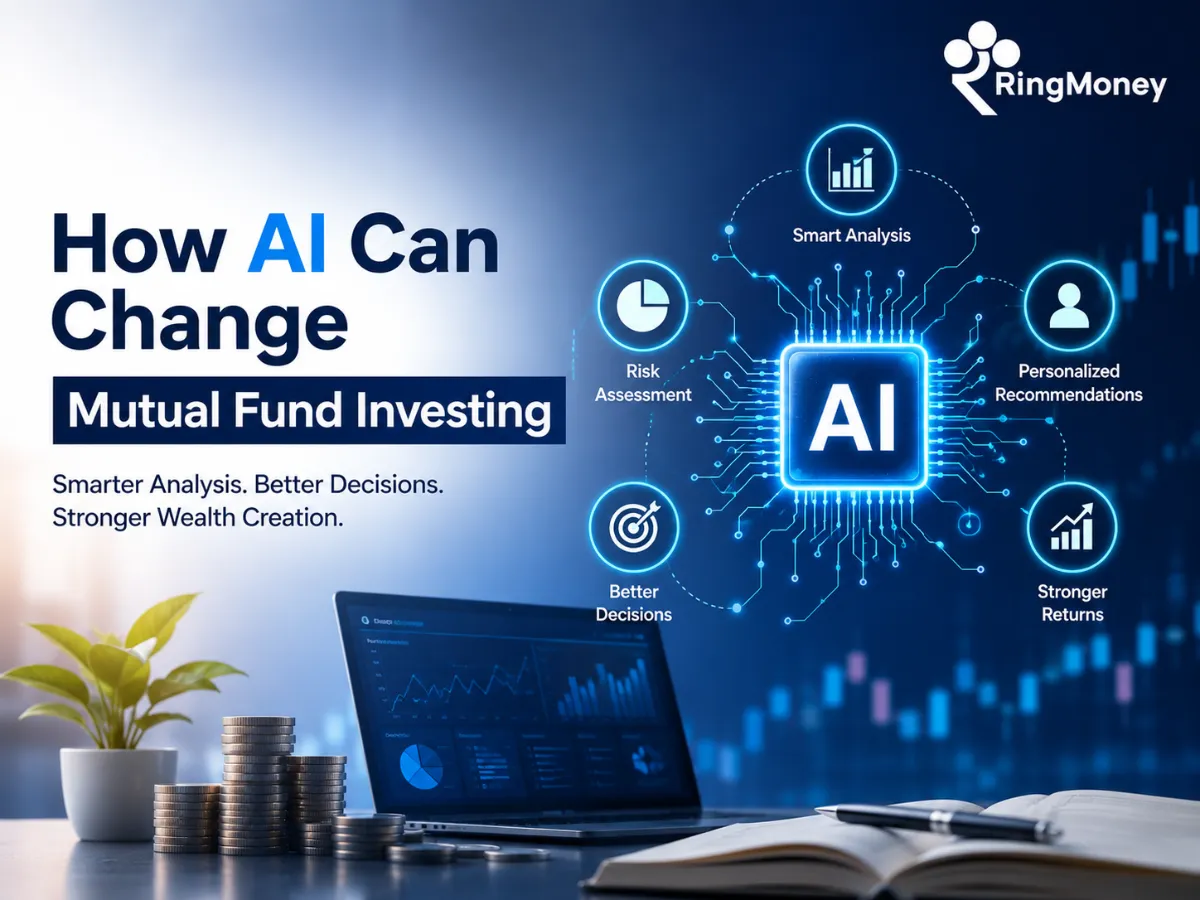
Artificial Intelligence (AI) is changing mutual fund investing by helping you make faster, more informed decisions through better data analysis, risk insights, and fund selection support.

Investing has always been about making the best possible decisions with incomplete information. But today, the problem is no longer a lack of data—it’s the overwhelming amount of it.

If you invest even casually, you already feel it. Market news, earnings updates, global events, interest rate changes, and fund reports constantly compete for your attention. Instead of making investing easier, this flood of information often creates confusion and hesitation, even for experienced investors.

AI steps in here not as a replacement for your judgment, but as a filter and analysis layer. It processes huge volumes of financial data, identifies meaningful patterns, and highlights what actually matters for your decisions.

What used to be available only to large institutional investors with dedicated research teams is now becoming accessible through modern investment platforms. This is making mutual fund investing more structured, more data-driven, and easier to manage in real-world conditions.

From Human Judgment to Intelligent Investing

For a long time, mutual fund investing mostly depended on human effort. You would compare past returns, look at how a fund manager has performed, read reports, and try to understand market trends before making a decision.

This approach still matters, but it has a natural limit. You can only read and process so much information at a time, while markets move constantly and generate far more data than any person can realistically track on their own.

This is where AI practically changes things. Instead of looking at a few factors at once, it can quickly go through large amounts of market data and highlight patterns, risks, and changes that are easy to miss.

The goal is not to replace your thinking. It simply helps you see the bigger picture more clearly, so your decisions are based on better, more complete information.

What Is AI in Mutual Fund Investing?

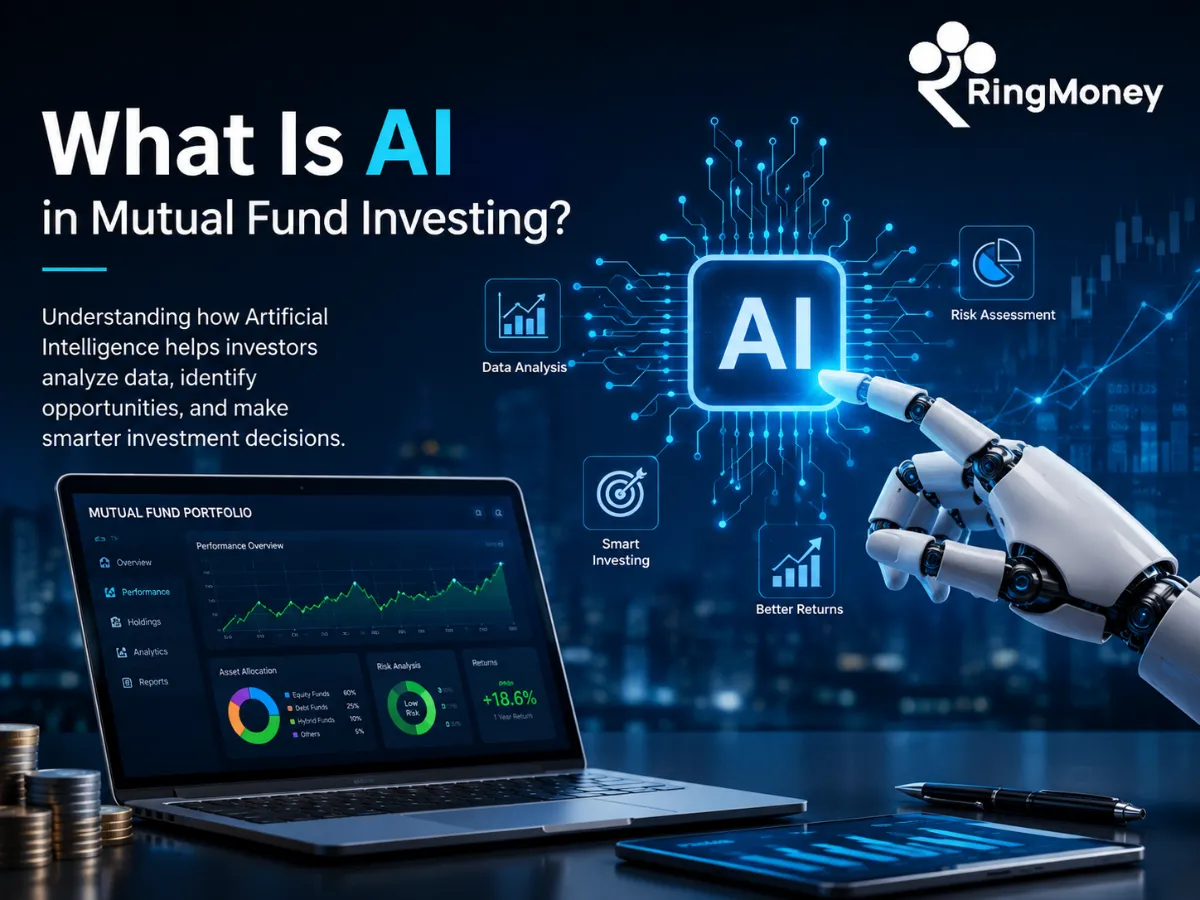
AI is often discussed as if it were a single technology. In reality, it combines several technologies that work together to analyse information and identify patterns.
What Is AI in Mutual Fund Investing?

In mutual fund investing, the most important AI capabilities include:

AI Technology

How It Helps Investors

Machine Learning

Identifies patterns from historical and current market data

Predictive Analytics

Estimates potential future outcomes using statistical models

Natural Language Processing (NLP)

Analyses news, reports, and market commentary

Automation

Handles repetitive monitoring and portfolio tracking

Recommendation Engines

Suggests investments based on investor preferences

Think of AI as a highly sophisticated research assistant.

A human analyst might review ten reports in a day. An AI system can process thousands of reports, identify trends, compare findings, and highlight anomalies within minutes.

This analytical capability is what makes AI increasingly valuable in mutual fund investing.

How AI Works in Investment Management

Behind the scenes, AI continuously gathers information from multiple sources and evaluates it for investment relevance.

These sources typically include:

  • Financial statements
  • Market performance data
  • Economic indicators
  • Corporate announcements
  • Regulatory filings
  • Industry reports
  • News coverage
  • Investor behavior trends

The real value comes from AI’s ability to connect seemingly unrelated information.

For example, a sudden increase in inflation, changes in interest rates, and declining corporate earnings may together indicate increased risk within certain sectors. AI can detect these relationships much faster than traditional manual analysis.

Investment firms have been using these capabilities for years. Today, retail investors are beginning to benefit from similar technologies through digital investment platforms and mutual fund apps.

How AI Is Transforming Mutual Fund Investing

AI Can Analyse More Data Than Humans Ever Could

The biggest challenge for modern investors is information overload.

Every mutual fund invests across multiple securities, industries, and economic environments. Understanding all the factors affecting performance can become overwhelming.

This is where AI creates a significant advantage.

Using Natural Language Processing (NLP), AI can review:

  • Earnings call transcripts
  • Financial reports
  • Market news
  • Economic updates
  • Analyst commentary
  • Regulatory announcements

More importantly, AI evaluates context rather than simply scanning keywords.

For example, it can identify whether sentiment around a sector is gradually improving or deteriorating, helping investors gain a deeper understanding of potential opportunities and risks.

Instead of spending hours gathering information, you can focus on interpreting insights and making better investment decisions.

Finding the Right Mutual Funds with AI Insights

Many investors still choose mutual funds mainly based on recent returns. The issue is that short-term performance rarely reflects the full picture of a fund’s long-term potential.

A fund’s actual strength depends on several factors working together, such as portfolio quality, risk-adjusted returns, consistency across market cycles, expense structure, asset allocation, and sector diversification.

AI helps by looking at all of these factors together instead of focusing on just one or two metrics. It can pick up patterns that may signal long-term stability or hidden risks that are not obvious in simple performance comparisons.

This makes fund selection more balanced and less dependent on surface-level numbers, helping you understand not just how a fund has performed, but how it is likely structured to behave over time.

Identifying Risks Before They Become Problems

Successful investing is not only about generating returns. It is also about managing risk effectively.

Many investors discover risks only after markets begin declining. By then, the damage may already be done.

AI helps shift risk management from reactive to proactive.

Advanced AI systems continuously monitor:

  • Market volatility
  • Sector concentration
  • Portfolio exposure
  • Economic trends
  • Liquidity conditions

This ongoing analysis allows potential issues to be identified earlier.

For example, if your portfolio becomes heavily concentrated in a sector facing increasing economic pressure, AI can flag the situation before it develops into a larger problem.

The ability to detect warning signs early is one of the most practical applications of AI in investing.

AI-Powered Investing Tailored to Your Financial Goals

No two investors have identical objectives.

Someone saving for retirement 25 years away will likely have a different risk profile than someone planning to use their investments within the next three years.

Traditional investing often struggled to personalise recommendations at scale.

AI makes personalisation far more effective.

It can analyse:

  • Investment goals
  • Time horizon
  • Risk tolerance
  • Income requirements
  • Existing portfolio composition

Based on this information, AI can support recommendations that are better aligned with your individual financial situation.

This level of personalisation helps investors avoid generic investment approaches and focus on strategies that genuinely match their needs.

Keeping Investments Aligned Through Faster Rebalancing

Portfolio rebalancing is one of the most overlooked aspects of long-term investing.

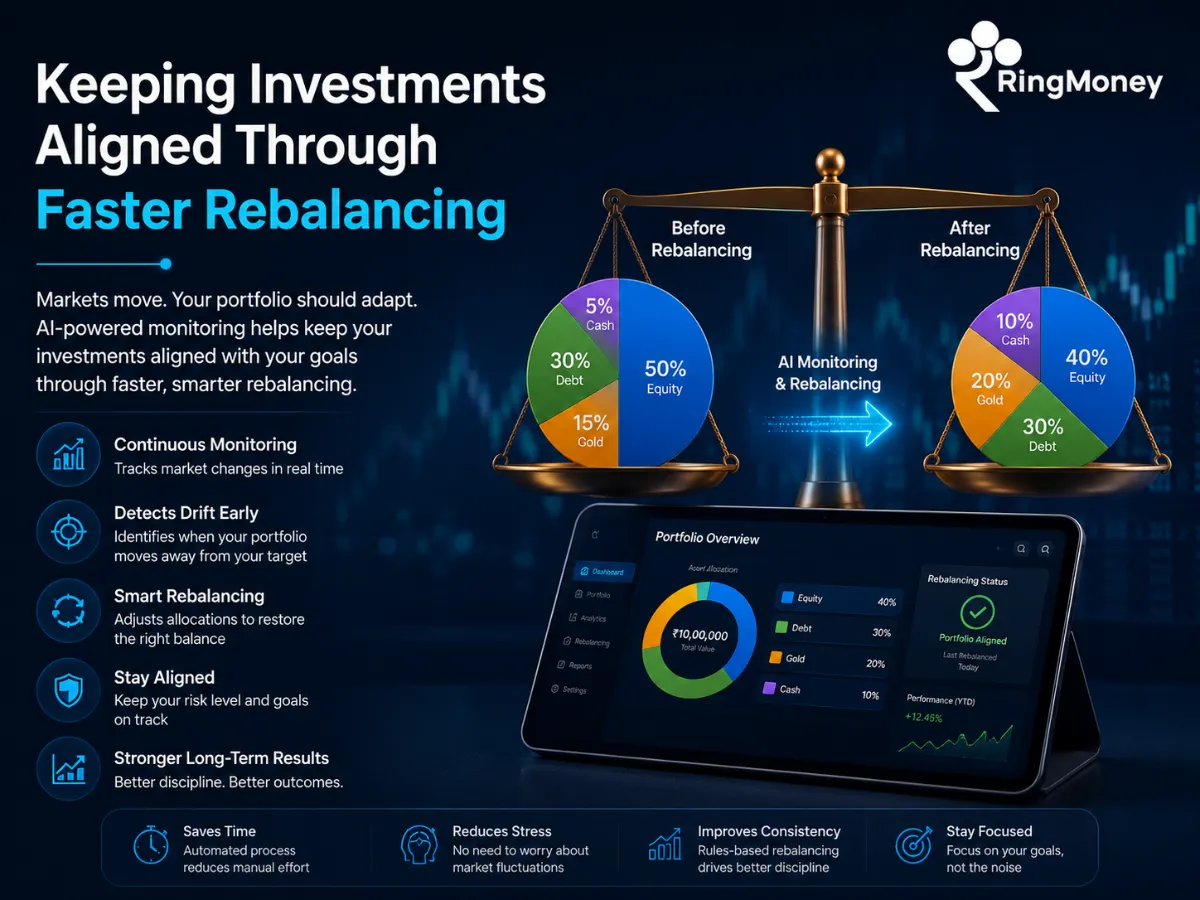
As markets move, your asset allocation naturally shifts. A portfolio originally designed to match your risk profile can gradually become more aggressive or more conservative than intended.

AI helps address this issue through continuous monitoring.

Benefits include:

  • Faster identification of allocation drift
  • Automated portfolio tracking
  • Reduced manual effort
  • Improved consistency
  • Lower emotional decision-making

By keeping investments aligned with predefined goals, investors can maintain greater discipline throughout changing market conditions.
Keeping Investments Aligned Through Faster Rebalancing

AI Platforms help simplify this process by providing investors with a streamlined environment to monitor and manage their mutual fund investments efficiently.

Benefits of AI for Mutual Fund Investors

AI offers several practical advantages that directly impact the investing experience.

Key Benefits at a Glance

Perhaps the most valuable benefit is objectivity.

Human investors are naturally influenced by fear, greed, media headlines, and short-term market noise. AI helps introduce a layer of discipline by evaluating investments using consistent analytical frameworks.

For long-term investors, this can lead to more rational and informed decisions.

Challenges and Limitations of AI in Mutual Funds

AI Is Powerful but Not Perfect

Despite its advantages, AI is not a crystal ball.

Its effectiveness depends heavily on the quality of the data it receives. Inaccurate, incomplete, or outdated information can affect outcomes.

AI also relies on historical patterns. While those patterns can be useful, financial markets do not always behave predictably.

Unexpected events such as:

  • Global crises
  • Geopolitical conflicts
  • Regulatory changes
  • Natural disasters
  • Sudden economic shocks

can disrupt historical relationships and create outcomes that algorithms may struggle to anticipate.

The Human Element Still Matters

One common misconception is that AI will eventually replace investors and fund managers. The reality is far more balanced. AI excels at:

  • Data processing
  • Pattern recognition
  • Speed
  • Automation

Humans excel at:

  • Strategic thinking
  • Contextual understanding
  • Ethical judgment
  • Evaluating unprecedented events

The most effective investment decisions typically emerge when human expertise and AI-powered insights work together.

Technology can improve decision quality, but human judgment remains essential.

Future of AI in Mutual Fund Investing

The role of AI in investing is still evolving, and its influence is expected to grow significantly over the coming years.

Several trends are likely to shape the future.

Hyper-Personalised Investing

Investment recommendations will become increasingly customised based on individual goals, life stages, and financial circumstances.

Real-Time Portfolio Optimisation

Future systems may continuously evaluate portfolios and provide dynamic recommendations based on changing market conditions.

More Advanced Robo-Advisory Services

AI-powered advisory platforms will likely become more sophisticated, offering deeper insights and more personalised guidance.

Predictive Investment Intelligence

As machine learning models improve, investors may gain access to earlier signals about emerging opportunities and potential risks.

These developments could make professional-grade investment intelligence more accessible to everyday investors than ever before.

Conclusion: AI Is Reshaping the Future of Mutual Fund Investing

AI isn’t about replacing human decision-making; it’s about supercharging it. By processing massive datasets instantly, AI helps investors spot market opportunities, proactively manage risk, and maintain unemotional discipline.

As markets grow more complex, combining tech with sound financial principles is no longer a luxury—it’s how long-term wealth is built.

Real-World AI Applications in Action

Instead of just theoretical benefits, here is how the industry is actually using AI today:

  • Predictive Analytics & Trend Forecasting: Quant-focused asset management firms like Renaissance Technologies or Two Sigma use machine learning algorithms to analyse historical data, sentiment, and alternative data sources to predict market movements before they happen.
  • AI-Driven Robo-Advisors: Platforms like Betterment and Wealthfront use automated algorithms to handle tax-loss harvesting and automatic portfolio rebalancing, optimising your asset allocation without human error.
  • Advanced Market Scanning: Services like TrendSpider or Tickeron use AI to scan thousands of stocks and funds simultaneously, identifying technical patterns and breakout trends in seconds.
  • Institutional-Grade Access: BlackRock’s Aladdin platform is a massive AI-driven risk management tool used by the world’s largest institutional investors to stress-test portfolios against thousands of economic scenarios.

Ultimately, AI is levelling the playing field—democratizing tools that used to be exclusive to Wall Street institutions and putting them directly into the hands of everyday investors.

Do not forget to share this post!

Related Blogs

In simple terms, what happens to your NFO after 5 years depends on the type...

If your goal is purely wealth creation, a long-term SIP will usually generate more wealth...

Young Indians are increasingly choosing SIPs over gold because SIPs offer a lower entry barrier,...

Download RingMoney App

Your personal data is safe with us

Hello India!