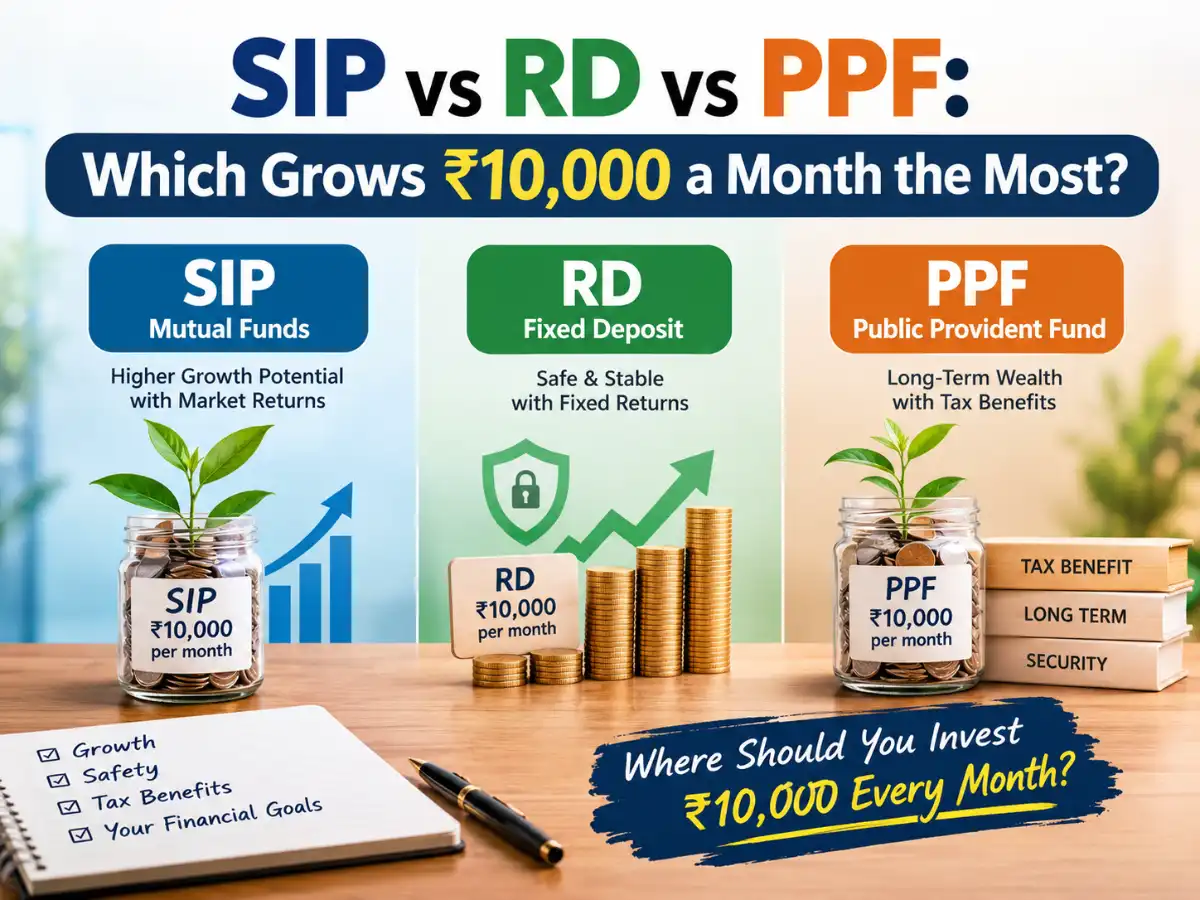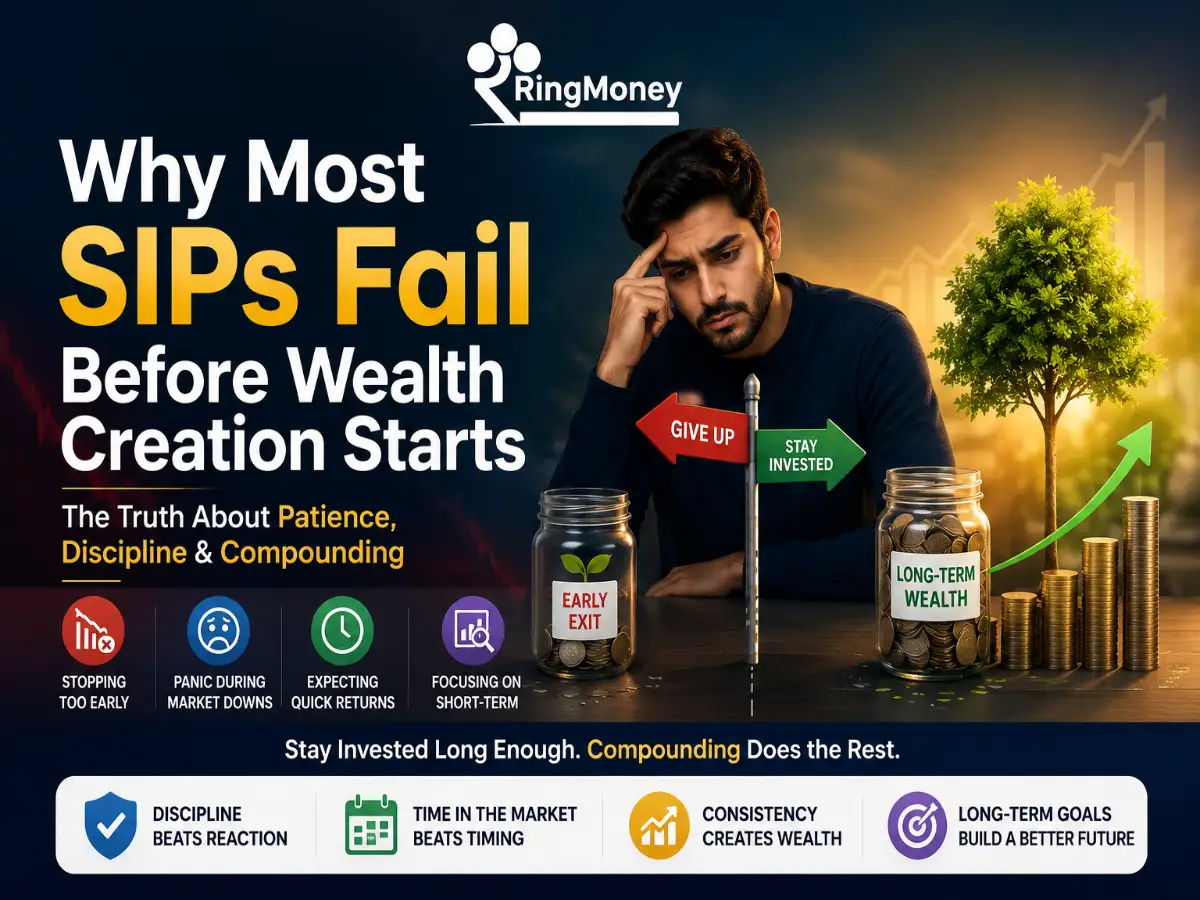
Most SIPs fail before creating real wealth because investors stop too early. They panic during market corrections, expect quick returns, constantly monitor short-term performance, or invest without a long-term financial goal.
The problem is rarely the SIP itself. In most cases, it is investor behaviour that breaks the compounding cycle before it has enough time to work.
Wealth creation through SIPs is not immediate or linear. The first few years often feel slow, uncertain, and unrewarding, which is exactly why many investors quit during the most important stage of the journey. Those who stay invested through volatility and maintain discipline are usually the ones who eventually experience meaningful long-term growth.
The Biggest Misconception About SIP Investing
Many investors assume that wealth creation through SIPs should look smooth and predictable from the outset. They expect visible portfolio growth within one or two years and become disappointed when returns appear average or inconsistent.
But equity investing does not reward impatience.
The early years of an SIP are usually slow because the portfolio is still building its base. In fact, during the first few years, investors are primarily accumulating units rather than seeing dramatic returns. The real impact of compounding becomes visible much later, once returns begin generating additional returns.
This is where most investors make the mistake.
They leave during the accumulation phase and miss the exponential phase completely.
Why the First Few Years Feel Underwhelming
One of the least discussed realities of long-term investing is that wealth creation is heavily back-loaded. The majority of portfolio growth often happens in the later years, not the beginning.
Consider this simple comparison:
Investment Period | Investor Behaviour | Potential Outcome |
1–3 Years | Frequent checking, impatience | Flat or modest returns |
5–7 Years | Consistency despite volatility | Noticeable portfolio acceleration |
10+ Years | Long-term discipline | Significant compounding effect |
Most investors quit somewhere in the first category.
This creates a dangerous cycle where people repeatedly start SIPs, stop midway, restart later, and never allow enough uninterrupted time for compounding to work properly.
Wealth creation requires continuity. Without it, even good investments struggle to deliver meaningful outcomes.
The Psychological Trap of Market Corrections
Market declines are uncomfortable. Seeing portfolio values fall creates anxiety, especially for new investors who are not emotionally prepared for volatility.
However, market corrections are not the enemy of SIP investing. In many cases, they are the reason SIPs become powerful over long periods.
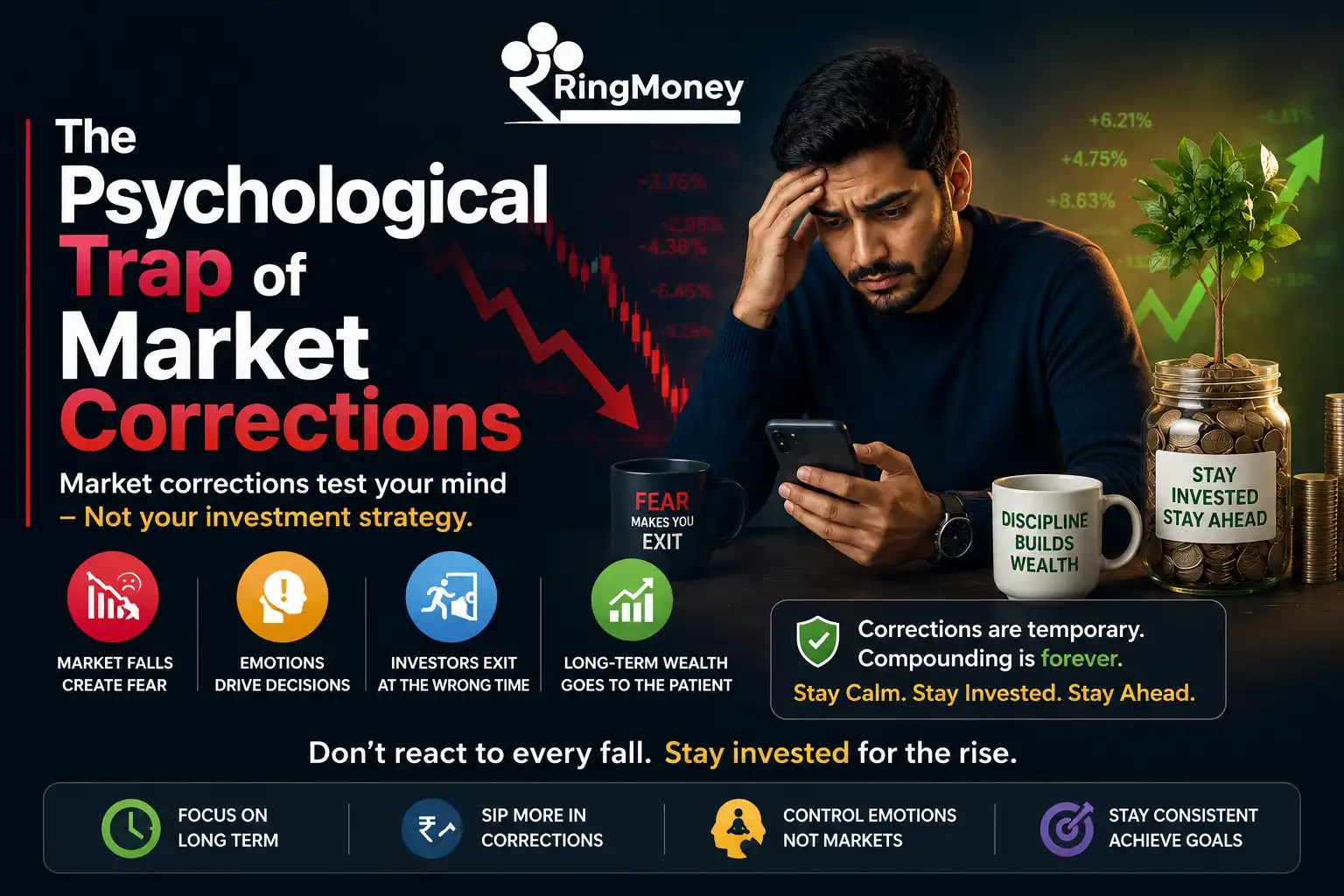
When markets fall, the same monthly SIP amount purchases more units at lower prices. Over time, those accumulated units can significantly improve long-term returns once markets recover.
Still, many investors do the opposite of what benefits them most.
They pause SIPs during corrections, stop investing altogether, or redeem investments out of fear. This converts temporary volatility into permanent damage.
The investors who typically build wealth are not the ones who avoid volatility. They are the ones who continue investing through it.
The Problem With Constant Portfolio Monitoring
Technology has made investing more accessible than ever. Unfortunately, it has also made over-monitoring extremely common.
Checking portfolio performance every day creates emotional pressure that long-term investing was never designed for. Equity markets naturally fluctuate in the short term, and frequent tracking often leads investors to react to temporary movements instead of focusing on long-term goals.
A 10-year investment strategy cannot be judged through weekly market behaviour.
Constant monitoring usually triggers:
- Panic during market declines
- Unrealistic expectations
- Frequent switching between funds
- Emotional investment decisions
- Loss of long-term discipline
Successful investing is often less about activity and more about restraint.
SIPs Without Goals Usually Fail Faster
One of the most overlooked reasons SIPs fail is the absence of a defined financial purpose.
Investments started casually — without linking them to retirement, children’s education, home ownership, or financial independence — tend to get interrupted more easily. During financial pressure or lifestyle spending, these SIPs are often the first thing investors stop.
Goals create commitment.
When investors understand exactly why they are investing and what future outcome they are building toward, staying disciplined becomes psychologically easier. The SIP stops feeling like a monthly deduction and starts feeling like progress toward something meaningful.
Chasing Returns Instead of Building Strategy
Another major reason investors struggle with wealth creation is performance chasing.
Many investors continuously move money toward whichever mutual fund category performed best recently. One year, it is small-cap funds. The next year, it becomes thematic funds or sector-specific strategies.
This behaviour creates unstable portfolios driven by trends instead of financial planning.
Consistent wealth creation rarely comes from chasing the highest short-term return. It usually comes from disciplined investing, sensible allocation, realistic expectations, and staying invested through multiple market cycles.
A portfolio built around patience generally performs better than one built around excitement.
The Hidden Damage of Starting and Stopping SIPs
Many investors underestimate the long-term cost of interrupting investments.
For example, an investor contributing ₹10,000 monthly for 15 years may build a substantially larger corpus than someone who invests aggressively for three years but repeatedly stops during market downturns.
The difference is not just the invested amount. It is the lost compounding time.
Even short interruptions can reduce long-term wealth potential because compounding depends heavily on uninterrupted duration. Every paused SIP delays momentum that takes years to rebuild.
This is why consistency matters more than intensity in long-term investing.
What Successful SIP Investors Do Differently
Investors who successfully build wealth through SIPs usually follow a very different mindset from short-term market participants.
They understand that:
- Market volatility is normal
- Wealth creation takes time
- Temporary declines are part of investing
- Long-term discipline matters more than short-term performance
- Consistency often beats perfect timing
Most importantly, they remove emotion from execution.
Rather than making monthly decisions based on headlines or market sentiment, they automate investing and stay focused on long-term financial outcomes.
How Smart Investors Reduce Emotional Investing
One of the most effective ways to improve investment discipline is by simplifying the investing process itself.
When investing feels complicated, emotionally exhausting, or difficult to track, investors become more likely to make impulsive decisions. Simplicity improves consistency.
This is where platforms designed around long-term investing behaviour make a meaningful difference.

At RingMoney, we focus on helping investors build disciplined SIP and mutual fund habits without unnecessary complexity. Instead of encouraging short-term reactions, we aim to simplify investing journeys through structured investing, easier portfolio management, and a smoother user experience that supports long-term financial goals.
Because ultimately, wealth creation is not about reacting to every market movement. It is about staying invested long enough for compounding to finally begin doing the heavy lifting.
Why We Built RingMoney: Designing for Consistency, Not Excitement
One of the most effective ways to improve investment discipline is by simplifying the environment in which you look at your money. When financial apps look like video games—filled with constant alerts, flashing red and green lights, and complex metrics—they actively trigger the urge to make impulsive, emotional decisions.
We built RingMoney to solve this exact problem.
Our platform is intentionally designed to strip away the noise from mutual fund and SIP investing. Instead of encouraging you to constantly buy, sell, or over-analyse daily market movements, we focus on structured automation and clean, stress-free portfolio tracking. By removing unnecessary complexity, RingMoney acts as a behavioural shield—helping you automate your discipline so your money stays invested long enough to achieve true, life-changing wealth.
The Real Secret Behind Long-Term Wealth Creation
The biggest advantage in investing is not finding a perfect fund before everyone else.
It is surviving long enough.
Most SIPs fail before wealth creation begins because investors expect immediate results from a process that disproportionately rewards patience in later years. The market tests discipline before it rewards it.
The uncomfortable truth is that investing often feels unrewarding right before it becomes rewarding.
That is why long-term wealth creation belongs less to the smartest investors and more to the most consistent ones.
Final Thoughts
SIPs remain one of the most effective tools for disciplined long-term investing, but their success depends entirely on investor behaviour. Starting an SIP is easy. Continuing it through uncertainty, boredom, corrections, and slow early growth is the difficult part.
Investors who understand this difference put themselves in a far stronger position to build meaningful wealth over time.
The goal should never be to chase quick returns or react to every market fluctuation. The goal is to create a process that continues working quietly in the background for years.
Because real wealth creation usually starts exactly where most people give up.
For regular investment tips, SIP updates, and simple money guidance, follow us on Instagram and explore the link in our bio to get started instantly.
Frequently Asked Questions
How long should an SIP ideally continue for meaningful wealth creation?
For equity mutual funds, investors generally need a horizon of at least 7–10 years to experience the stronger effects of compounding and reduce the impact of short-term market volatility.
Is increasing the SIP amount every year better than keeping it fixed?
Yes, gradually increasing SIP contributions with income growth can significantly improve long-term wealth creation without putting sudden pressure on monthly finances.
Should investors stop SIPs during uncertain economic conditions?
Economic uncertainty is usually temporary, while long-term investing goals are not. Continuing SIPs during uncertain phases often helps investors accumulate more units at lower market levels.
Can too many mutual funds reduce portfolio efficiency?
Yes, holding too many similar funds can create overlap, make tracking difficult, and dilute portfolio performance instead of improving diversification.
What is more important in SIP investing — fund selection or consistency?
A good fund matters, but long-term consistency often has a bigger impact on final wealth creation. Even strong funds cannot deliver results if investments are stopped repeatedly.