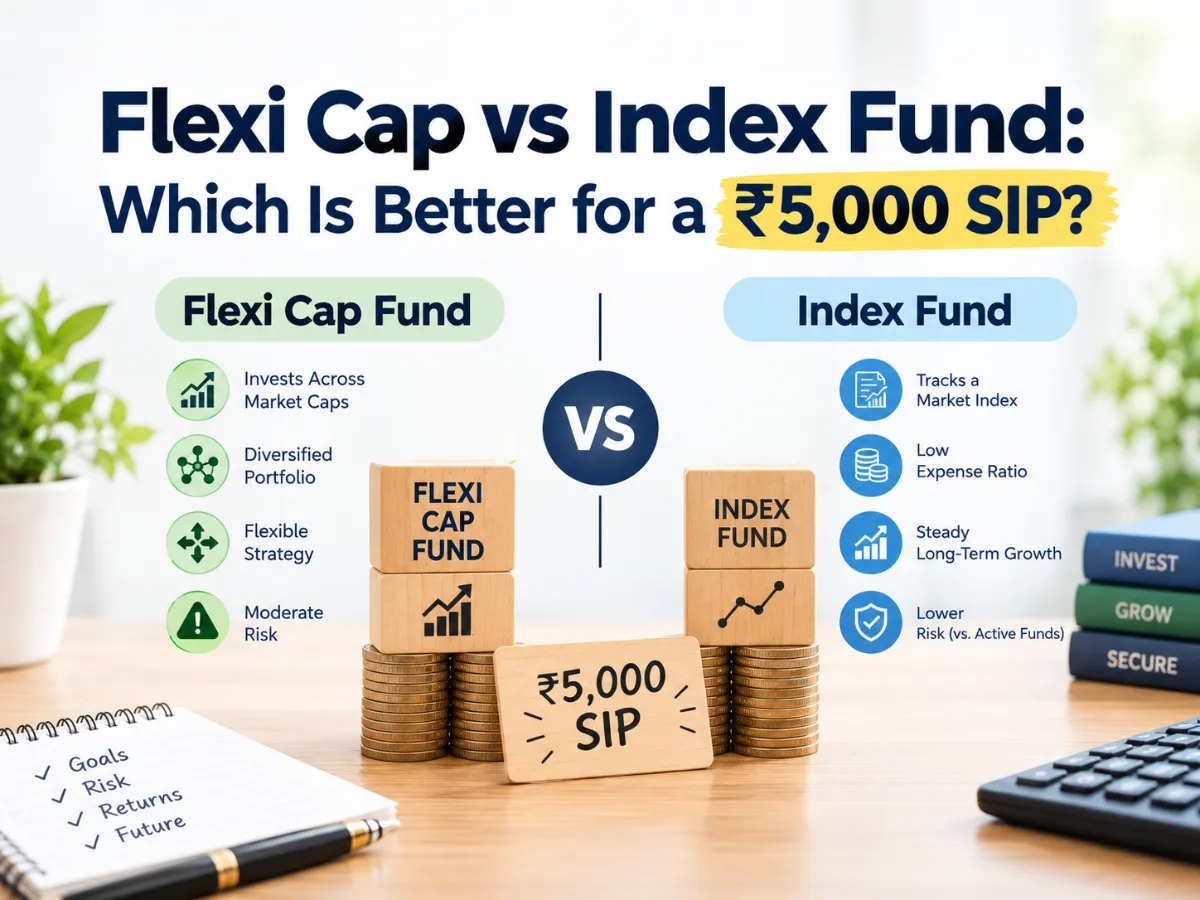
Quick answer: Choose a Nifty 50 or Nifty 500 index fund if you want low cost, no fund-manager risk and returns close to the market. Choose a flexi cap fund if you’re willing to pay more for a manager who can move between large, mid and small caps and might beat the index, or might not. For a first ₹5,000 SIP, either is a sound choice. Splitting it ₹2,500 / ₹2,500 works well if you can’t decide.
This is the question we hear most from first-time investors on RingMoney. It’s also the one where online advice gets the most heated. Let’s keep it practical.
What’s the difference?
| Feature | Index Fund (e.g. Nifty 50 / Nifty 500) | Flexi Cap Fund |
|---|---|---|
| How it picks stocks | Copies an index exactly | Fund manager chooses freely across large, mid and small caps |
| Expense ratio | Low; many index funds charge relatively little | Generally higher because it is actively managed |
| Goal | Match the market index, minus costs and tracking difference | Aim to outperform the market after costs |
| Fund-manager risk | No active fund-manager selection risk | Manager changes or investment decisions can affect returns |
| Return vs index | Usually tracks the index, less costs and tracking difference | Can outperform or underperform the benchmark |
| Effort for you | Very low; periodic portfolio review is still useful | Review performance, strategy and fund-manager changes periodically |
The case for index funds
Costs compound against you. A flexi cap fund might charge 0.6–1.5 percentage points more a year than a cheap index fund (depending on the plan). The active manager has to beat the index by that much every year just to break even with you.
Most active large-cap funds haven’t managed that. S&P’s SPIVA India scorecards have repeatedly found that a majority of actively managed large-cap funds trailed their benchmark over 5- and 10-year periods. Large caps are well researched, so there’s little edge left to find.
No manager risk. Star managers leave. Strategies drift. An index fund doesn’t care.
The case for flexi cap funds
Freedom to move. A flexi cap manager can shift toward mid and small caps when they’re cheap and back to large caps when they’re stretched. A Nifty 50 fund can’t.
India’s broader market is less efficient than the US. Outside the top 100 companies, skilled managers have historically had more room to add value. That’s why flexi cap and mid cap funds have a better active record than large-cap funds.
Some investors stay invested better with a “manager” story. It sounds soft, but behaviour drives returns. If knowing someone is actively managing your money keeps you from stopping SIPs in a crash, that has real value.
Which is better for a ₹5,000 SIP?
You are… | Our suggestion |
|---|---|
Brand new and want simplicity | Nifty 50 index fund: one fund, low cost |
Want broader market exposure at index cost | Nifty 500 index fund (covers large, mid and small) |
Happy to review once a year and accept manager risk | One proven flexi cap fund (5+ year track record) |
Can’t decide | ₹2,500 in an index fund + ₹2,500 in a flexi cap fund |
The split isn’t a cop-out. It’s a hedge against the one thing nobody knows: whether your flexi cap fund will beat the index over your next 15 years.
How to pick a good flexi cap fund (if you go active)
- Rolling returns over 5 years, not last year’s return. Consistency beats one big year (why the top performer is often a bad choice).
- Fund manager tenure. If today’s manager has run it for under 3 years, the long-term record belongs to someone else.
- Expense ratio relative to peers.
- Downside capture. How much did it fall in 2020 and in the 2024–25 small-cap correction compared with the Nifty 500?
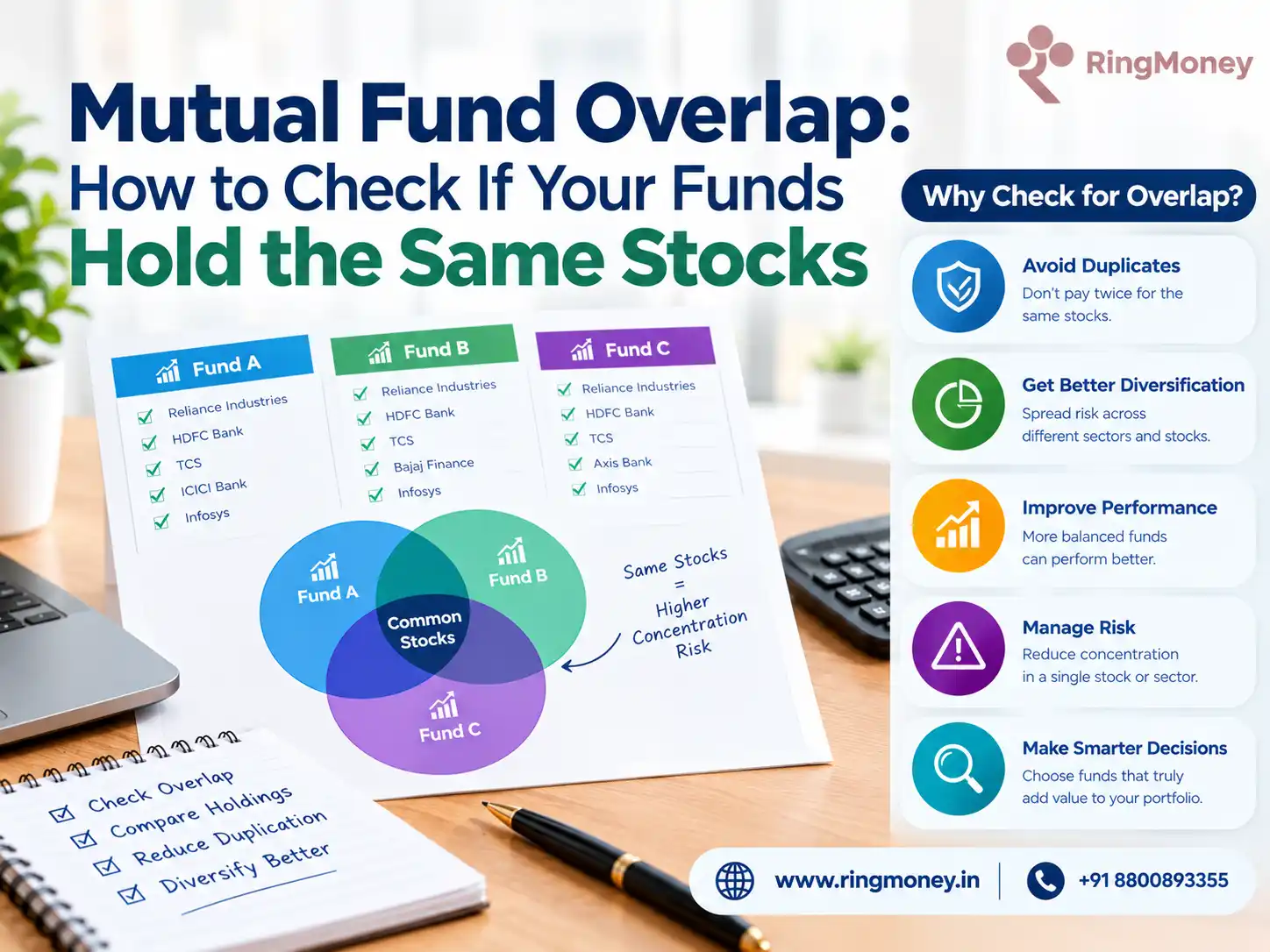
- Portfolio overlap with funds you already own (how many funds should you own?).
How to pick an index fund
Index funds following the same index are nearly identical, so compare just two things:
- Expense ratio: lower is better.
- Tracking error: how closely it follows the index. Lower is better.
Fund size helps too. Larger funds usually track more tightly.
A note on taxes and switching
Both are equity funds for tax purposes: 12.5% on long-term gains above ₹1.25 lakh a year after 12 months, 20% on short-term gains. So the choice doesn’t change your tax. Switching later from one to the other is a sale, though, so pick something you’re happy to hold for 10+ years.
Frequently Asked Questions
Is an index fund better than a flexi cap fund?
Index funds win on cost and simplicity. Flexi cap funds can beat the index if the manager is good, but many active funds don’t after fees. For a first SIP, either is reasonable.
Can I invest in both an index fund and a flexi cap fund?
Yes. They overlap partly (both own large caps), but a flexi cap adds mid and small cap exposure the Nifty 50 doesn’t have.
Which is less risky?
A Nifty 50 index fund is usually less volatile, because a flexi cap fund may hold more mid and small caps. A Nifty 500 index fund sits in between.
How long should I hold either for a SIP?
At least 7–10 years. Equity funds of any kind can fall 20–40% in bad years.
What does RingMoney’s First Time Investor Ring hold?
See the First Time Investor Ring for its current fund mix and the reasoning behind it.
Mutual fund investments are subject to market risks. Read all scheme-related documents carefully. RingMoney is an AMFI-registered mutual fund distributor (ARN-320453). Past performance doesn’t guarantee future returns.
Related reading: Should You Invest Only in Index Funds? · Equity Funds · How to Choose the Right Mutual Fund