
Young Indians are increasingly choosing SIPs over gold because SIPs offer a lower entry barrier, greater wealth-creation potential through compounding, and the convenience of digital investing. While gold remains an important asset for safety and diversification, many young investors now view SIPs as a more effective way to build long-term wealth.
For decades, financial security in India had a familiar shape. It looked like a gold necklace stored in a locker, a set of bangles purchased during a festival, or a few gold coins kept aside for emergencies.
Today, that picture is changing.
If you’re in your 20s or 30s, there’s a good chance your approach to money looks very different from your parents’. Instead of saving for the next gold purchase, you may be setting up a monthly SIP from your smartphone, tracking investments through an app, and focusing on long-term wealth creation rather than simply preserving capital.
This shift reflects a broader change in how young Indians think about money, inflation, financial freedom, and future goals. The question is no longer whether gold is valuable. The real question is why a ₹500 monthly SIP is increasingly becoming more attractive than buying physical gold.
Why Gold Became India's Most Trusted Asset
To understand the rise of SIPs, you first need to understand the emotional relationship Indians have with gold.
Gold has never been just an investment in India. It has traditionally represented security, social status, family wealth, and financial protection.

For generations, families relied on gold because it offered several advantages:
- It could be sold during emergencies.
- It held value over long periods.
- It was widely accepted across the country.
- It played an important role in weddings and festivals.
- It provided a sense of financial comfort during uncertain times.
For many parents and grandparents, gold wasn’t merely a financial asset. It was a safety net.
This belief was shaped by experience. Previous generations lived through periods of economic uncertainty, limited investment options, and less access to financial markets. Physical gold was something they could see, touch, and trust.
That trust still exists. However, younger investors are now evaluating investments through a different lens.
Instead of asking, “How can I protect my money?” they’re asking, “How can I grow my money?”
That single mindset shift changes everything.
The Rise of India's SIP Generation
Over the last decade, investing has become significantly more accessible. You no longer need a stockbroker, extensive paperwork, or a large amount of capital to start investing. Mobile-first platforms have simplified the entire process.
Whether you’re using investment platforms, mutual fund apps, or digital wealth management tools, investing today is often easier than opening a fixed deposit. As a result, young Indians have started investing earlier than previous generations. Many begin their first SIP while still in college, while others start within months of receiving their first salary.
This has created a major cultural shift. The focus is gradually moving from saving money to making money work for you, and SIPs have become the preferred vehicle for that journey.
This reads more naturally, maintains momentum, and avoids the AI-style pattern of one or two sentences per paragraph while keeping the original meaning intact.
How Investment Apps Made SIPs Mainstream
The growth of SIP investing is closely linked to the rise of mobile-first investment platforms. A decade ago, starting an investment often involved paperwork, branch visits, and multiple intermediaries. Today, you can complete KYC, compare mutual funds, and start a SIP directly from your smartphone within minutes.
The widespread availability of affordable internet, digital payments, and user-friendly apps has made investing accessible to millions of first-time investors across India. Platforms such as RingMoney, Groww, Zerodha Coin, ET Money, and Paytm Money have simplified the process, allowing young investors to start small, track performance in real time, and manage their portfolios from anywhere.
This accessibility has removed many of the barriers that once kept ordinary savers away from investing. For many young Indians, starting a SIP is now as convenient as using any other everyday financial app.
You Can Start Small Without Waiting for a Large Corpus
One of the biggest reasons young investors choose SIPs is simple: affordability. Physical gold usually requires a lump-sum purchase, and even buying a small quantity can feel expensive for students, fresh graduates, or early-career professionals managing rent, EMIs, and daily expenses.
A SIP removes that barrier. You can start with:
- ₹500 per month
- ₹1,000 per month
- ₹2,000 per month
The amount isn’t what matters initially. The habit is.
This low entry point allows you to begin investing immediately rather than waiting years to accumulate a large sum. For a 23-year-old professional earning their first salary, that flexibility is incredibly powerful. Instead of postponing investing, you can start building wealth from day one.
The Real Difference: Compounding vs Price Appreciation
This is where the comparison becomes more interesting. Gold and SIPs don’t grow wealth in the same way.
When gold appreciates, the value of your holding rises because the market price increases. But the gold itself doesn’t generate additional income. Ten grams of gold today will still be ten grams of gold ten years later.
A SIP works differently. When the underlying investments generate returns, those gains remain invested, and future returns are then earned not only on your original investment but also on the accumulated gains. In simple terms, your money starts earning money.
Over long periods, this creates the compounding effect that wealth managers often describe as one of the most powerful forces in investing. Historically, gold has performed well as an inflation hedge, often delivering long-term annualised returns in the range of approximately 8%–10%. Diversified equity investments, meanwhile, have historically targeted returns closer to 12%–15% over extended periods, although actual returns vary and are never guaranteed.
That difference may seem small on paper. Over 15 or 20 years, however, it can translate into a dramatically larger corpus. This is the wealth creation premium many young investors are chasing.
Technology Has Removed Most Investment Friction
A major reason behind the SIP boom is convenience. Investing today fits naturally into your daily digital life.
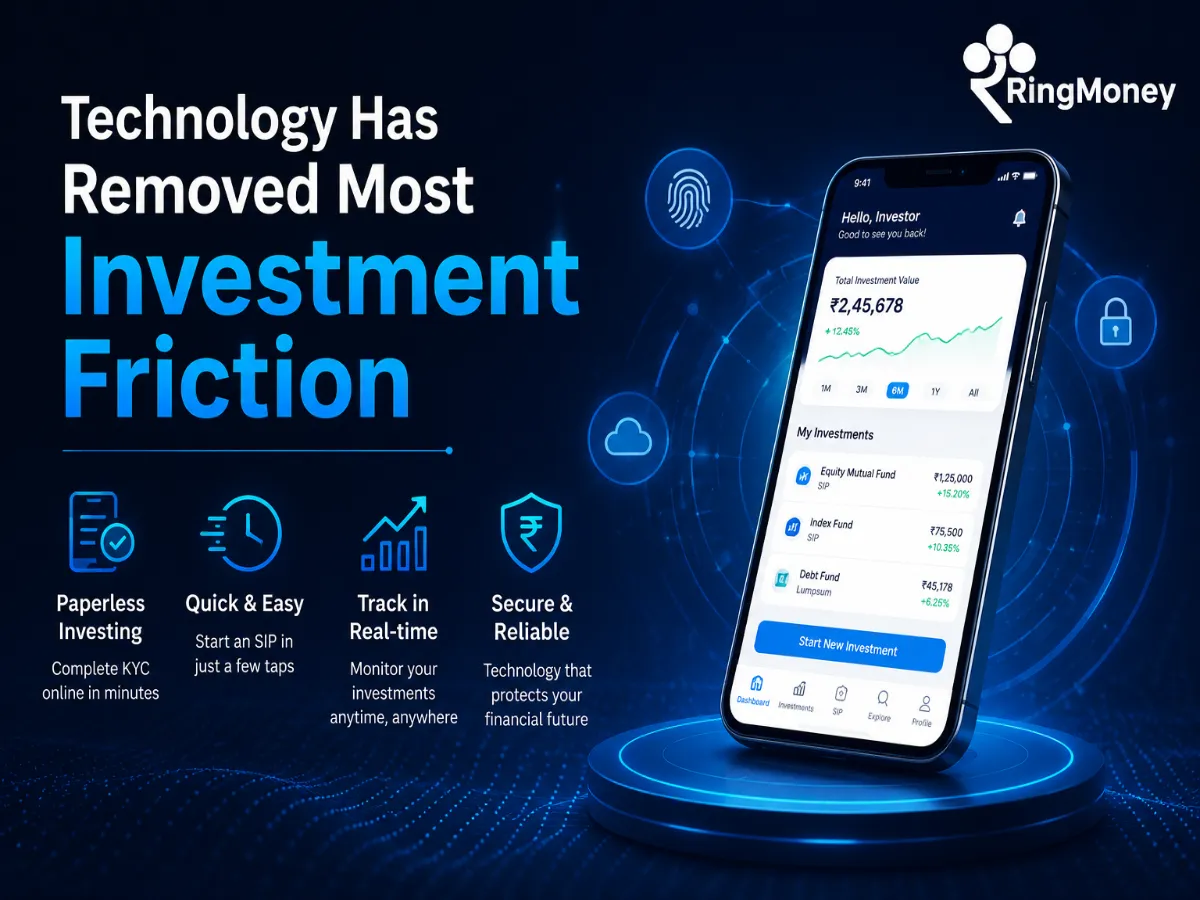
You can:
- Complete KYC online.
- Start an SIP within minutes.
- Track performance in real time.
- Increase investments instantly.
- Automate monthly contributions.
Once an SIP is activated, the process becomes almost invisible. The investment happens automatically.
Physical gold comes with a different experience. You need to purchase it, store it safely, protect it from theft, and often pay locker charges if you want additional security. Technology has made investing effortless, and young investors tend to choose the path with less friction.
Flexibility Matters More Than Ever
Modern financial goals are not always predictable. You may decide to pursue higher education, switch careers, start a business, travel extensively, or move cities. In situations like these, flexibility becomes important, and SIPs provide that flexibility.
You can:
- Pause contributions.
- Increase investment amounts.
- Reduce investments.
- Redeem units when required.
The process is largely digital, making it easy to adapt your investments as your circumstances change.
Physical gold is often described as highly liquid, but the reality is more nuanced. Selling gold may involve:
- Purity verification
- Dealer negotiations
- Buyback deductions
- Transportation concerns
In some cases, you may also receive less than expected because of pricing spreads and resale adjustments. For investors who value convenience and flexibility, SIPs often provide a smoother experience.
The Hidden Costs Most Young Investors Notice
Many first-time investors are surprised when they discover the hidden costs associated with physical gold. Jewellery purchases often include making charges, which can range from approximately 8% to 25% or even more, depending on the design and retailer.
The challenge is that these costs are generally not recovered during resale. In practical terms, you may begin your investment journey at a disadvantage from day one. Young investors increasingly understand this concept and prefer investment vehicles where a larger portion of their money starts working immediately rather than being absorbed by upfront charges. That awareness has contributed to the growing preference for SIPs.
Gen Z Is Thinking Beyond Traditional Wealth Preservation
The modern investor is pursuing different goals. While your parents may have focused primarily on financial security, you may be focused on:
- Financial independence
- Early retirement
- Building multiple income sources
- International travel
- Entrepreneurship
- Lifestyle flexibility
This difference matters. Younger generations are consuming more financial content than any previous generation. Through finance podcasts, YouTube channels, newsletters, and educational content, they are gaining exposure to concepts that were once limited to financial professionals.
As a result, many investors now understand an important principle: short-term market volatility is not the same as long-term investment risk. That understanding has encouraged greater participation in SIP investing.
Gold Isn't Disappearing—Its Role Is Changing
Despite the growing popularity of SIPs, gold remains relevant. The smartest investors aren’t choosing one asset and ignoring the other. Instead, they are assigning different roles to each within their portfolio.
Gold is increasingly viewed as:
- A hedge against uncertainty
- A diversification tool
- A defensive asset
At the same time, SIPs are being used as:
- Wealth creation engines
- Long-term growth vehicles
- Goal-based investment tools
Interestingly, many young investors are still allocating money to gold.
The difference is that they’re often choosing alternatives such as:
- Gold ETFs
- Gold mutual funds
- Sovereign Gold Bonds (SGBs)
However, new Sovereign Gold Bond issuances have become limited in recent years as the government has significantly reduced fresh SGB offerings, making them less accessible than they were earlier. This is one reason why many investors now prefer Gold ETFs and Gold Mutual Funds when seeking digital gold exposure.
The preference is shifting away from physical ownership and toward financial efficiency.
SIP vs Gold: A Practical Comparison
Factor | SIP Investment | Physical Gold |
Primary Objective | Long-term wealth creation | Wealth preservation and an inflation hedge |
Starting Amount | As low as ₹500 | Requires a lump-sum purchase |
Growth Mechanism | Compounding over time | Price appreciation |
Convenience | Fully digital | Physical purchase and storage |
Flexibility | Easy to modify or pause | Limited flexibility |
Storage Requirement | None | Required |
Hidden Costs | Fund expenses | Making charges, storage costs + 3% GST |
Liquidity | Digital redemption | Physical resale process |
What the Numbers Reveal About Investor Behaviour
The shift toward SIPs is not just anecdotal.
Industry data from the Association of Mutual Funds in India (AMFI) continues to show strong SIP participation, with monthly SIP inflows consistently remaining above the ₹30,000 crore mark in recent periods.
More importantly, this growth is no longer limited to metropolitan cities.
Investors from Tier 2 and Tier 3 cities are increasingly participating in mutual funds and systematic investing.
This suggests that the change is structural rather than temporary.
Financial awareness is spreading across the country, and younger investors are embracing disciplined investing habits earlier than ever before.
The Future of Investing in India
The rise of SIPs doesn’t mean young Indians are abandoning traditional wisdom. It means they are adapting it.
Gold still offers stability, cultural significance, and protection during uncertain times. But SIPs offer something many young investors need more urgently: the ability to build meaningful wealth over the long term.
The real story isn’t SIP versus gold. It’s about understanding the role each asset plays. Gold helps preserve wealth, while SIPs help create it.
That is why India’s younger generation is not rejecting gold. They are simply upgrading their financial mindset to match the opportunities and challenges of a modern economy.
Frequently Asked Questions
Can you invest in both SIPs and gold at the same time?
Yes. Many financial planners recommend using both for different purposes—SIPs for long-term growth and gold for diversification and protection during periods of economic uncertainty.
What happens to your SIP during a market crash?
Your SIP continues investing at lower market prices, allowing you to accumulate more units. For long-term investors, market corrections can become opportunities rather than setbacks.
Is it too late to start a SIP in your 30s?
Not at all. While starting earlier provides a longer compounding period, investors in their 30s, 40s, and even later can still build substantial wealth through disciplined and consistent investing.
How much of your portfolio should be allocated to gold?
There is no universal percentage. The allocation depends on your risk tolerance, financial goals, investment horizon, and overall asset mix rather than a fixed rule.
Can SIP returns ever be lower than gold returns?
Yes. Over certain short-term periods, gold can outperform equity markets. However, SIP investing is generally designed for long-term wealth creation, where performance is evaluated over many years rather than months.