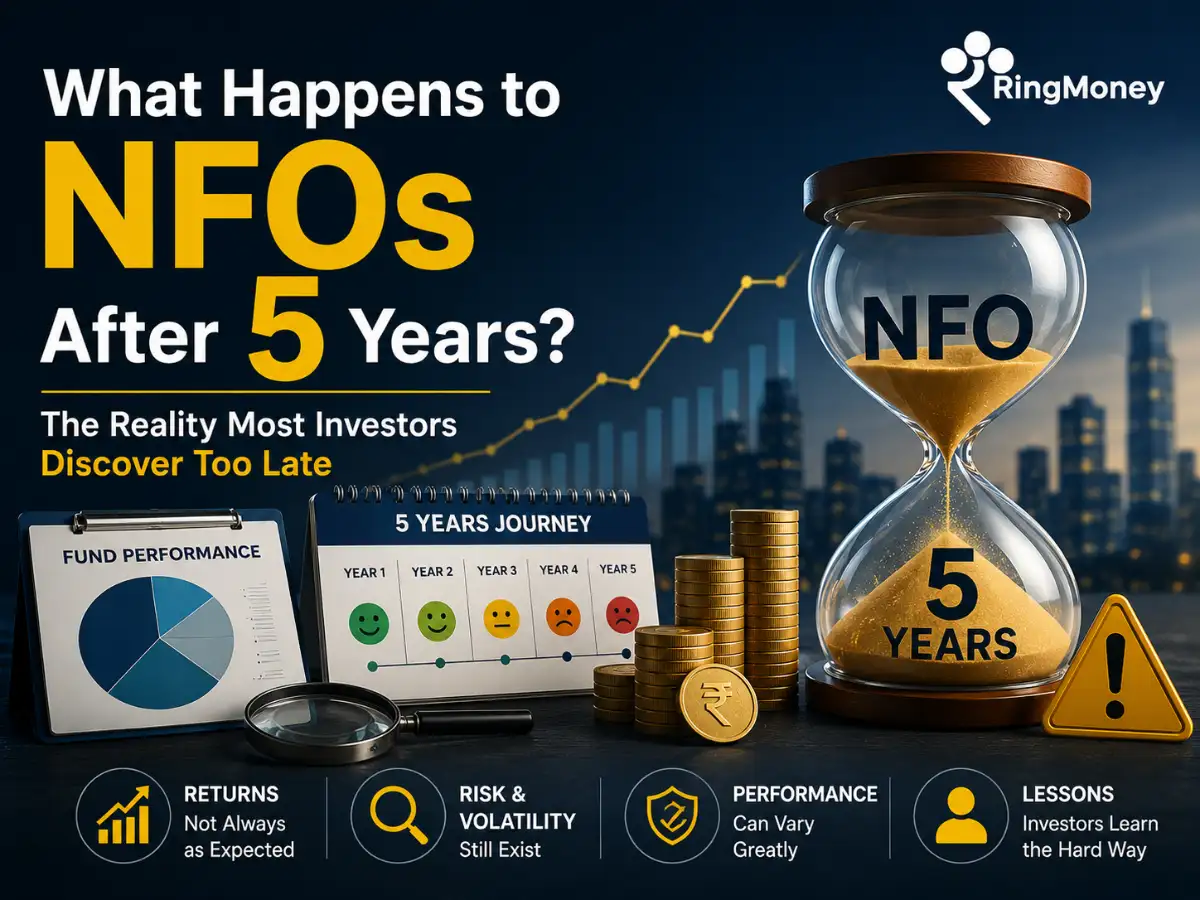
In simple terms, what happens to your NFO after 5 years depends on the type of fund you invested in.
If it’s a closed-ended NFO, the fund usually reaches its maturity date, sells its investments, returns the money to investors, and shuts down. If it’s an open-ended NFO, nothing special happens at year five—the fund continues running, and you can stay invested, invest more, or withdraw your money whenever you want.
Yet this is something many investors don’t think about when investing in an NFO. Most attention goes to the launch period, the fund theme, or the ₹10 starting NAV. Very few investors ask what their investment will look like five years later.
Will the fund still exist? Can you continue investing? What if performance is disappointing? Should you stay invested or exit?
The answers matter because the real test of an NFO doesn’t happen during the launch phase. It happens after the fund has spent years navigating different market conditions and building a track record.
Before Looking 5 Years Ahead, Let's Understand What an NFO Really Is
An NFO is simply the launch period of a new mutual fund scheme. During this time, investors get the first opportunity to invest in the fund before it starts operating like a regular mutual fund.
Fund houses introduce NFOs when they want to launch a new investment strategy, enter a specific market segment, or offer investors exposure to a particular theme.
However, not all NFOs follow the same path after launch. Some are created with a fixed tenure, while others are designed to continue indefinitely. This structure plays a major role in determining what happens to your investment over the next five years and beyond.
Before evaluating returns, liquidity, or maturity, it’s important to understand which type of NFO you own.
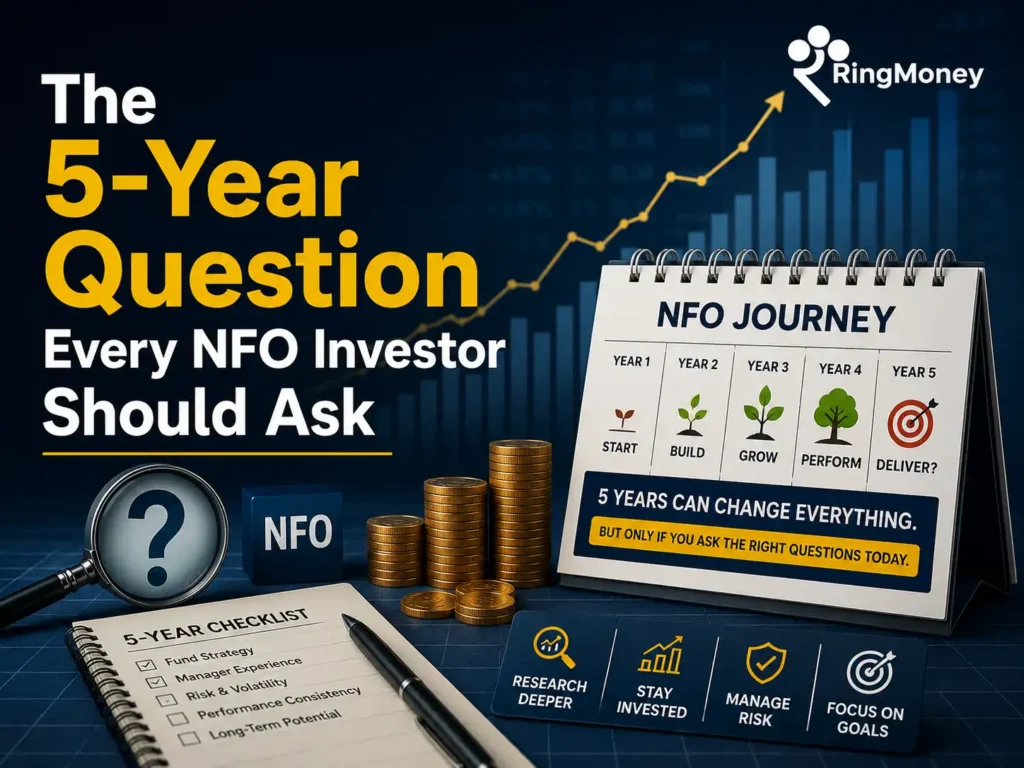
The 5-Year Question Every NFO Investor Should Ask
If you’ve invested in an NFO, the questions that matter aren’t usually asked during the launch period.
Instead, five years later, you may find yourself wondering:
- Will my investment automatically mature?
- Will I receive my money back?
- Can I continue investing in the scheme?
- What happens if the fund underperforms?
- Does the original NFO still exist?
The answers depend entirely on whether you invested in a closed-ended or open-ended scheme.
Before reviewing performance, you need to understand which path your investment follows.
Scenario 1: What Happens If the NFO Is a Closed-Ended Fund?
If your NFO is a closed-ended fund, the scheme reaches its maturity date and the investment journey comes to an end.
The Fund Reaches Its Maturity Date
Closed-ended NFOs are launched with a fixed tenure, usually between 3 and 5 years. Once that period ends, the fund starts winding up.
Your Investments Are Converted Into Cash
The fund manager sells the assets held in the portfolio and calculates the final NAV. This NAV determines the amount payable to each investor.
The Money Is Credited to Your Account
The proceeds are automatically transferred to your registered bank account. The payout reflects the value of your investment at maturity, including any gains or losses.
The Fund Officially Closes
After all investors receive their money, the scheme is closed permanently and ceases to exist.
Key Insight: Unlike open-ended mutual funds, closed-ended NFOs have a predefined end date. Once they mature, investors receive the proceeds and the fund shuts down.
Scenario 2: What Happens If the NFO Is an Open-Ended Fund?
If your NFO is an open-ended fund, reaching the five-year mark doesn’t trigger any major event. The NFO phase ended long ago, but the mutual fund continues operating like any other regular scheme.
Nothing Changes Automatically at Year Five
Open-ended funds do not have a maturity date. Your investment remains invested unless you choose to redeem it.
You Can Stay Invested for the Long Term
As long as the fund continues operating and aligns with your financial goals, you can remain invested for 10, 15, or even 20 years.
You Can Continue Investing
Even though the NFO subscription period has ended, the scheme remains open for fresh investments. You can invest through lump-sum contributions, SIPs, or additional purchases whenever you want.
You Can Redeem Whenever You Want
If you decide to withdraw your money, you can redeem your units at the prevailing NAV, subject to any applicable exit load rules.
Key Takeaway: The NFO phase is only the beginning. After launch, an open-ended NFO simply becomes a regular mutual fund that you can continue investing in or redeem from whenever needed.
Closed-Ended vs Open-Ended NFOs After 5 Years
Feature | Closed-Ended NFO | Open-Ended NFO |
Maturity date | Yes | No |
Fund continues after 5 years | No | Yes |
Additional investments allowed | No | Yes |
Automatic payout at maturity | Yes | No |
Investor controls redemption timing | Limited | Complete |
Scheme existence after 5 years | Ends | Continues |
The Real Test Begins After 5 Years, Not At Launch
The launch period of an NFO often receives far more attention than it deserves. The truth is that a fund’s quality cannot be judged on launch day.
During the first few years, investors have little evidence about:
- Portfolio construction
- Risk management
- Fund manager execution
- Performance consistency
Five years change that.
A five-year history gives you enough data to evaluate whether the fund has actually delivered on its promises. This is where marketing narratives give way to measurable results.
In many ways, the fifth year acts as a reality check.
5 Things Smart Investors Check After an NFO Completes 5 Years
Has the Fund Beaten Its Benchmark?
Positive returns alone don’t tell the full story. A stronger measure is whether the fund has outperformed the benchmark index it was designed to beat. If it consistently lags behind, it’s worth understanding the reasons.
What Is the Fund's 5-Year Average Annual Growth?
Total returns can sometimes create a misleading picture. Looking at the fund’s average annual growth over five years gives you a better understanding of how effectively it has compounded your money over time.
How Does It Compare With Similar Funds?
A fund should always be evaluated against its peers. Compare its performance with other funds in the same category, whether it’s large-cap, flexi-cap, or sectoral. A fund that consistently ranks well within its category is often a stronger choice than one relying on marketing appeal.
Has the Fund Manager Delivered Consistent Results?
One strong year doesn’t necessarily indicate a good fund. The real test is consistency across different market conditions. Look at whether the fund manager has maintained a disciplined strategy and delivered reasonably stable performance over time.
Does the Fund Still Fit Your Financial Goals?
A lot can change in five years. Even if the fund has performed well, it may no longer align with your goals, risk tolerance, or investment horizon. Reviewing its role in your portfolio is just as important as reviewing its returns.
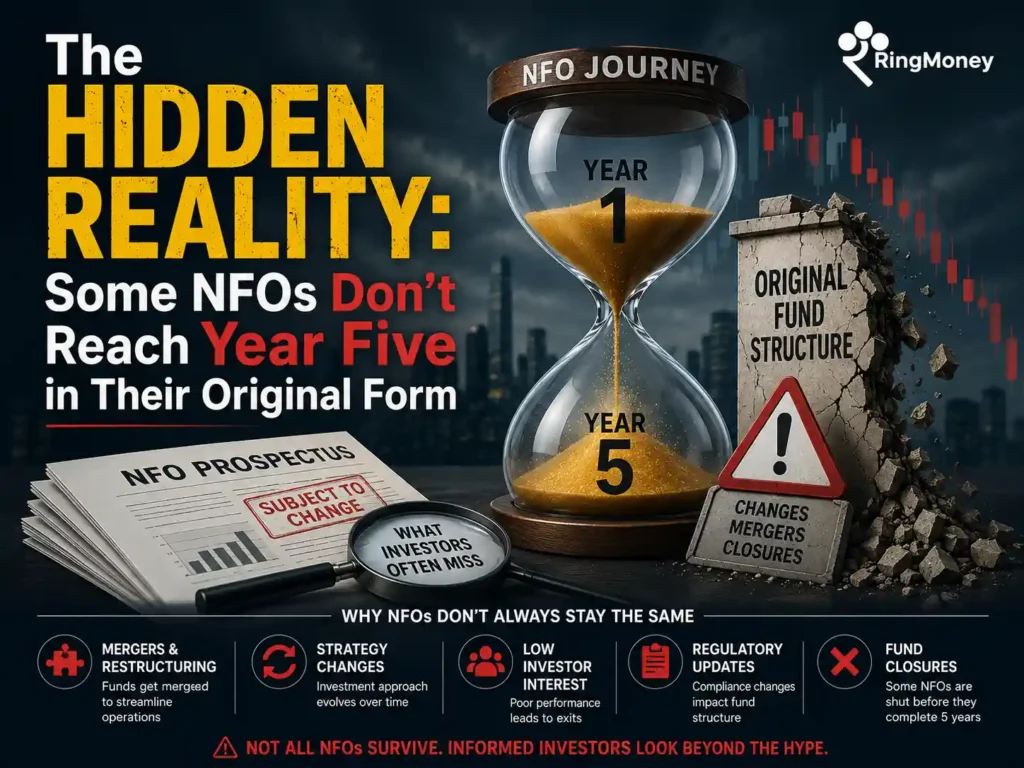
The Hidden Reality: Some NFOs Don't Reach Year Five in Their Original Form
This is something many investors never consider. Not every NFO survives as an independent scheme.
If a fund struggles to attract investors or fails to build a sustainable track record, the fund house may decide to merge it with another scheme.
As a result:
- The fund name may change.
- The investment strategy may evolve.
- The original NFO identity may disappear.
This doesn’t necessarily harm investors, but it highlights an important reality:
After five years, many NFOs are judged by performance, not by their launch story.
Can You Lose Money Even After Staying Invested for 5 Years?
Yes, you can lose money even after staying invested for five years. While a longer holding period generally improves the chances of positive returns, it does not eliminate investment risk.
Market downturns, economic slowdowns, poor fund management decisions, or investing at stretched valuations can all affect long-term performance. This risk is especially relevant for thematic and sector-focused NFOs, where returns often depend heavily on the success of a specific trend or industry.
A fund launched during a popular investment cycle may struggle if that theme loses momentum over the following years. That’s why diversification, realistic return expectations, and regular portfolio reviews remain important. Time can help reduce risk, but it cannot guarantee profits.
What About Exit Loads and Withdrawal Charges After 5 Years?
For most open-ended funds, exit loads are temporary and usually apply only if you redeem your investment within the first year. By the time a fund completes five years, these charges have often expired.
That said, it’s important not to make assumptions. Exit load rules can vary from one scheme to another, so before redeeming your units, take a moment to review the scheme documents, current exit load structure, and latest fund disclosures. A quick check can help you avoid unexpected charges.
The Biggest Mistake Investors Make With NFOs
The biggest mistake is focusing on the NFO label rather than the underlying investment quality. Several myths continue to influence investor decisions.
Myth 1: A ₹10 NAV Means the Fund Is Cheaper
This is perhaps the most common misconception. A ₹10 NAV does not make a fund cheaper than an older fund with a ₹100 NAV. The starting unit price tells you nothing about future performance, as returns depend on portfolio growth, not the initial NAV.
Myth 2: Every NFO Offers a Unique Opportunity
Many NFOs simply package existing strategies in a new format. Before investing, ask whether the fund genuinely fills a gap in your portfolio.
Myth 3: New Funds Are Automatically Better
A new fund has no proven history. An established fund with a strong long-term record may be a more reliable choice.
Myth 4: Launch Hype Predicts Future Returns
Marketing campaigns can attract attention, but they cannot guarantee investment success. Five years later, performance—not advertising—determines whether the fund deserves your money.
The Real Challenge Isn't What Happens After 5 Years—It's Choosing the Right NFO Today
The biggest problem with NFO investing is that you’re deciding without a performance track record. Many investors get influenced by launch buzz, thematic trends, or the ₹10 NAV without fully understanding whether the fund fits their goals and risk profile.
That’s where having the right platform matters. Instead of relying on marketing narratives, you need access to clear fund information, meaningful comparisons, and expert-backed insights before investing.
With RingMoney, you can explore and invest in NFOs through a platform designed to help you make more informed decisions. Whether you’re evaluating a The Money Is Credited to Your Account a long-term mutual fund portfolio, the focus remains on suitability and investment quality—not just the excitement of a new launch.
Because in the long run, successful NFO investing isn’t about buying a fund on day one. It’s about choosing a fund that can justify your investment years later.
Frequently Asked Questions
Is an NFO automatically redeemed after 5 years?
Only closed-ended NFOs are typically redeemed automatically at maturity. Open-ended NFOs continue operating and remain invested unless you choose to redeem.
Can I continue investing in an NFO after launch?
Yes, if the NFO is open-ended. Once the launch period ends, it functions like a regular mutual fund and continues accepting investments.
Do all NFOs have a maturity date?
No. Only closed-ended NFOs have fixed maturity dates. Open-ended schemes can continue indefinitely.
What happens if an NFO performs poorly?
Poor-performing NFOs may continue operating, experience investor outflows, or sometimes be merged into another scheme by the fund house.
How do I check the 5-year performance of an NFO?
You can review fund fact sheets, AMC reports, benchmark comparisons, category rankings, and independent mutual fund research platforms.