
If a mutual fund nominee passes away before the investor, the nomination becomes invalid immediately. In practical terms, this means your investment is now treated as having no nominee at all, and if something happens to you, your family may have to go through a legal claim process instead of a simple transfer.
This is not just a technical detail—it directly affects how quickly and smoothly your loved ones can access your money. Without a valid nominee, even well-planned investments can get stuck in documentation, verification, and sometimes court procedures.
The good part is that this situation is completely fixable. Acting early—by updating your nominee—can prevent delays, reduce legal complications, and ensure your investments are passed on exactly as intended.
In this guide, we break down what this situation means, what steps you should take right now, and how to keep your mutual fund investments structured in a way that protects your family.
What Happens When a Nominee Dies Before the Investor?
A nominee is simply a designated person to receive mutual fund units after the investor’s death. But if that nominee is no longer alive, the system does not automatically assign a replacement.
Instead:
- The folio is treated as “no nominee registered”
- The smooth transfer process is lost
- Legal heirs may need to go through formal succession procedures
In short, what was meant to be a simple transfer becomes a legal process.
The Immediate Risk of Doing Nothing
Many investors overlook this situation, assuming it will sort itself out. It doesn’t.
If the investor passes away without updating the nominee:
- Family members cannot directly claim the investment
- The AMC (Asset Management Company) will require legal proof of heirship
- This can involve court procedures, affidavits, and delays
What could have taken a few days may stretch into months.
Scenario 1: Investor is Alive — What Should Be Done?
If you are the investor and your nominee has passed away, the solution is straightforward—but it must be done promptly.

Step-by-Step Action Plan
- Update the nominee immediately through the AMC website or registrar (CAMS/KFintech)
- Provide details of the new nominee (PAN, Aadhaar, relationship, etc.)
- Confirm the update and keep a record
This small step restores the simplicity of transmission and protects your family from future stress.
Why Updating Matters More Than Ever
Modern portfolios are often spread across multiple fund houses. Tracking nomination status across all of them can be difficult.
This is where we see real value in platforms like RingMoney. By consolidating mutual fund holdings into one dashboard, it becomes easier to monitor nominee details and ensure nothing is outdated or missing.
Scenario 2: Investor and Nominee Both Deceased
This is the more complex situation—and unfortunately, not uncommon.
When both the investor and nominee are no longer alive:
- The investment does not automatically transfer
- Legal heirs must initiate a transmission process
Step-by-Step: Transmission Process for Legal Heirs
1. Inform the AMC or Registrar
The first step is to notify the fund house or registrar (such as CAMS or KFintech) of the deaths.
2. Submit Required Documents
Legal heirs must provide:
- Death certificate of the investor
- Death certificate of the nominee
- Proof of legal heirship (succession certificate / legal heir certificate / probated will)
- KYC documents (PAN, Aadhaar, etc.)
- Bank details of the claimant
3. Fill Transmission Request Form (T3)
The T3 form is the official request to transfer mutual fund units to the legal heir.
4. Verification and Processing
- The AMC verifies documents
- Units are transferred to the legal heir’s account
- Timeline is typically around 30 days (if documents are complete)
Tip– Incomplete documentation is the #1 cause for this timeline to double.
Key Scenarios Explained Clearly
Situation | What Happens | Required Action |
Nominee dies, investor alive | Nomination becomes invalid | Update the nominee immediately |
Investor dies, nominee alive | Nominee claims units | Submit death certificate + KYC |
Investor & nominee both deceased | No valid nominee exists | Legal heirs initiate transmission |
No nominee at all | Treated as a legal succession case | Succession certificate required |
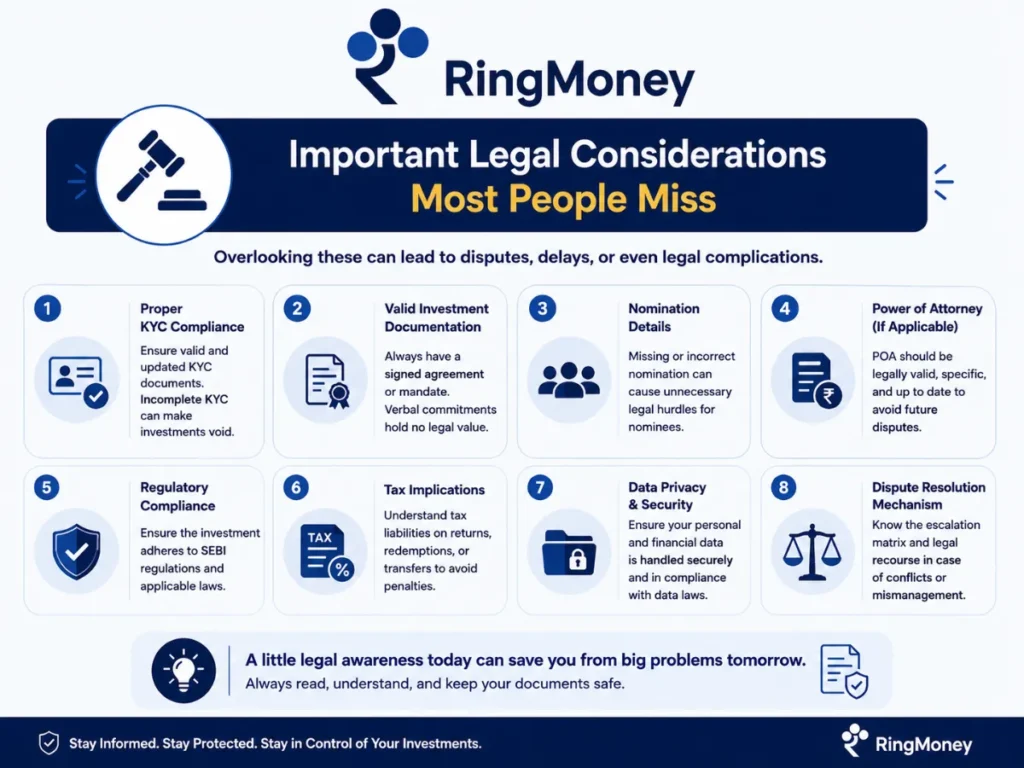
Important Legal Considerations Most People Miss
- Nominee vs Legal Heir
A nominee is not always the final owner. They act as a custodian of the assets.
If there is a valid will, the legal heirs mentioned in the will can override the nominee.
- Small Value Claims
For smaller investments:
- Some AMCs allow claims using:
- Indemnity bond
- Affidavit
This avoids the need for a succession certificate.
- Large Claims Require Court Documents
For higher-value portfolios:
- A succession certificate or probate will is often mandatory
- This can take time and involve legal costs
- Multiple Nominees Rule
If there were multiple nominees and one passes away:
- Their share is usually redistributed among the surviving nominees
- Unless specific percentages were defined differently
The Hidden Complexity: Multiple Folios
Most investors don’t have just one mutual fund.
They may have:
- Investments across multiple AMCs
- SIPs in different schemes
- Older folks may have forgotten
In such cases:
- Each AMC must be contacted separately
- Each requires documentation
This is where consolidation becomes crucial. We often recommend using a platform like RingMoney, which helps bring all investments into one place, making tracking and updates significantly easier.
Documentation Checklist (Quick Reference)
For Nominee or Joint Holder
- Transmission request form
- Death certificate (notarised)
- KYC documents
- Bank details
For Legal Heirs
In addition to the above:
- Succession certificate / probated will
- Indemnity bond
- Affidavit from all heirs
Timeline: What to Expect
Step | Approximate Time |
Document submission | 2–5 days |
Verification by AMC | 7–15 days |
Final transfer | Within 30 days |
Delays usually happen due to incomplete documentation.
How to Avoid This Situation Entirely
This issue is preventable with a few simple habits.
1. Review Nominee Details Regularly
Life changes quickly:
- Marriage
- Children
- Death in the family
Nominee details should be updated accordingly.
2. Maintain Clear Records
Keep:
- Investment statements
- Folio numbers
- AMC details
Accessible to at least one trusted family member.
3. Use a Consolidated Investment Platform
Managing everything manually is difficult.
We believe tools like RingMoney simplify this process by:
- Providing a single view of all investments
- Helping track nomination status
- Reducing dependency on multiple platforms
This reduces the chances of something being overlooked.
Why These Rules Exist
While the process may seem complex, it exists to protect investors.
Without these safeguards:
- Anyone could claim assets fraudulently
- Disputes among heirs would increase
The documentation ensures that the rightful person receives the investment.
Practical Example
Consider this situation:
- An investor had ₹8 lakh in mutual funds
- The nominee passed away years earlier
- The investor never updated the record
After the investor’s death:
- Family members had to obtain a succession certificate
- The process took several months
- Access to funds was delayed during a critical time
A simple update could have prevented all of this.
Final Thoughts
A deceased nominee may seem like a minor administrative issue, but it has major consequences if ignored.
For regular investment tips, SIP updates, and simple money guidance, follow us on Instagram and explore the link in our bio to get started instantly.
Updating your nominee is one of the simplest yet most important financial actions you can take. It ensures that your investments reach your loved ones without delays, disputes, or legal hurdles.
Quick Action Summary
- Check your mutual fund nominee today
- Update immediately if the nominee is no longer alive
- Keep records organised and accessible
- Consider using a platform like RingMoney to manage everything in one place
A few minutes of action today can save your family months of stress later.
Frequently Asked Questions
What happens if I forget to update my nominee after their death?
If the nominee is not updated, your mutual fund folio effectively remains without a valid nominee. This increases the chances of delays and legal documentation requirements for your family when claiming the investment later.
Can I add more than one nominee to avoid this issue in future?
Yes, mutual funds allow multiple nominees, and you can assign specific percentage shares to each. This reduces dependency on a single individual and ensures continuity even if one nominee is no longer alive.
Do I need to update the nominee separately for every mutual fund?
Yes, nominations are linked to individual folios, not your entire portfolio. If you have investments across different AMCs or folios, each one must be updated individually unless you use a consolidated platform.
Is there any cost or tax involved in changing a nominee?
No, updating or changing a nominee is completely free and does not trigger any tax implications. It is considered an administrative update, not a financial transaction.
How can I ensure my family actually knows about my investments?
Beyond adding a nominee, it’s important to maintain a clear record of your investments and share access details with a trusted person. Using a centralised app like RingMoney can help keep everything visible and easier to manage for your family when needed.