
Mutual Funds for Someone With an Existing Home Loan EMI

Mutual Funds for Someone With an Existing Home Loan EMI

Many home loan borrowers assume every extra rupee should go toward prepaying the loan. But in 2026, financial planning is no longer just about becoming debt-free quickly — it is also about continuing wealth creation alongside your EMI.

With home loan interest rates generally between 8.25% and 9.5%, many investors now follow the “SIP + EMI” approach, where a portion of monthly savings is invested in mutual funds while regular EMI payments continue. The logic is simple: over the long term, quality mutual funds have the potential to generate returns that may outperform the effective cost of the loan.

Instead of choosing between investing and repayment, the smarter strategy is often balancing both. A disciplined SIP, even if it is just 10%–20% of the EMI amount, can gradually build long-term wealth while the home loan gets repaid over time.

Why Stopping Investments During a Home Loan May Not Always Be the Best Decision

A home loan is a long-term liability. Most borrowers spend 15 to 25 years repaying it, and a large portion of the EMI in the initial years goes toward interest rather than principal repayment.

At the same time, inflation continues to increase the cost of living. Simply focusing on debt repayment while pausing investments for two decades can create another problem later — inadequate wealth creation.

This is where mutual funds become important.

A disciplined investment strategy running alongside a home loan can help borrowers:

  • Build long-term wealth while repaying debt
  • Create a financial cushion for emergencies
  • Potentially offset part of the home loan interest burden
  • Prepare for future goals without depending entirely on property appreciation

The goal is not aggressive risk-taking. The goal is balance.

Understanding the “SIP + EMI” Strategy

The “SIP + EMI” approach works on a simple principle: continue investing systematically while servicing the home loan regularly.

Instead of directing every surplus amount toward prepayment, a portion is invested through SIPs in carefully selected mutual funds. Over time, compounding allows the investment corpus to grow alongside loan repayment.

A Simple Example

Details

Amount

Home Loan EMI

₹45,000

Suggested SIP Allocation (10%–20%)

₹4,500 – ₹9,000

Investment Duration

15–20 Years

Even a relatively small SIP, when continued consistently over long periods, can build a sizeable corpus due to compounding.

For many borrowers, this strategy also provides psychological comfort. Instead of feeling financially “stuck” because of a home loan, they continue progressing toward wealth creation.

The Financial Logic Behind Investing Alongside a Home Loan

The core argument behind this strategy comes down to return potential.

If a borrower aggressively prepays a home loan carrying an effective interest cost of around 8%–9%, the savings are fixed and guaranteed. However, long-term diversified equity mutual funds have historically generated higher return potential over extended periods.

This does not mean mutual funds are risk-free. Markets fluctuate, and returns are never guaranteed. But over long investment horizons, equities have generally outperformed inflation and fixed borrowing costs.

The Financial Logic Behind Investing Alongside a Home Loan

For taxpayers claiming deductions under applicable home loan tax benefits, the effective post-tax loan cost may be reduced even further. In some cases, this makes investing mathematically more efficient than aggressive prepayment. 

For salaried borrowers, home loans also come with tax advantages. Under Section 24(b) of the Income Tax Act, individuals can claim deductions of up to ₹2 lakh annually on home loan interest payments for a self-occupied property. This can reduce the effective cost of borrowing, which is one reason many investors prefer balancing EMIs with long-term mutual fund investments instead of aggressively prepaying the entire loan. 

That said, the strategy only works when investments are disciplined and long-term.

Best Mutual Fund Categories for Home Loan Borrowers

Not every mutual fund category suits someone already managing a monthly EMI. The ideal portfolio should balance growth, stability, and manageable risk.

Here are the most practical categories for borrowers in 2026.

1. Aggressive Hybrid Funds: Balanced Growth With Lower Volatility

Aggressive hybrid funds are often considered one of the safest starting points for borrowers who are new to equity investing.

These funds typically invest:

  • 65%–80% in equity
  • 20%–35% in debt instruments

This combination helps reduce volatility compared to pure equity funds while still offering growth potential.

Why They Suit Home Loan Borrowers

Someone already paying a fixed EMI every month may not be comfortable with highly volatile investments. Hybrid funds create a middle path by adding stability through debt exposure.

Popular examples in this category include:

  • SBI Mutual Fund Equity Hybrid Fund
  • HDFC Mutual Fund Balanced Advantage Fund
  • Mirae Asset Mutual Fund Aggressive Hybrid Fund

These funds are generally suitable for conservative to moderate-risk investors.

2. Flexi Cap Funds: Long-Term Wealth Creation

Flexi-cap funds offer flexibility to invest across large-cap, mid-cap, and small-cap companies depending on market conditions.

Unlike rigid categories, fund managers can dynamically allocate investments where they see the best opportunities.

Why Flexi Cap Funds Work Well

Home loans usually span long durations. This long investment horizon aligns well with flexi cap funds, which are designed for long-term capital appreciation.

For borrowers aiming to build meaningful wealth while continuing EMI payments, flexi cap funds can provide:

  • Diversification across sectors and market caps
  • Better adaptability during changing market cycles
  • Strong long-term growth potential

Well-known options include:

  • Parag Parikh Flexi Cap Fund
  • HDFC Flexi Cap Fund
  • JioBlackRock Flexi Cap Fund

These are often preferred by investors looking for a “set-and-grow” style portfolio.

3. Large Cap Funds: Stability Over Aggression

Some borrowers prefer predictable, relatively stable investment options instead of chasing maximum returns.

Large-cap funds invest primarily in established blue-chip companies with strong market positions and relatively lower volatility compared to mid and small-cap funds.

Who Should Consider Large Cap Funds?

Large-cap funds may suit:

  • First-time investors
  • Borrowers with shorter loan tenures
  • Individuals uncomfortable with sharp market fluctuations

While return potential may be comparatively moderate, the stability can help borrowers stay invested consistently without panic during market corrections.

4. Mid Cap Funds: Suitable for Younger Borrowers With Longer Horizons

Mid-cap funds carry higher volatility but also higher long-term growth potential.

For younger borrowers with:

  • Stable income
  • Long home loan tenure
  • Higher risk tolerance

Mid-cap funds can help accelerate wealth creation over 15–20 years.

Examples include:

  • Motilal Oswal Midcap Fund
  • Nippon India Growth Fund

However, mid-cap exposure should generally remain limited within a diversified portfolio for borrowers managing large financial liabilities.

Smart Ways to Manage SIPs Alongside EMIs

The success of the “SIP + EMI” strategy depends more on consistency than on timing the market.

Here are some practical approaches followed by financially disciplined borrowers.

Start With a Manageable SIP

One of the biggest mistakes investors make is starting with an unrealistically high amount and discontinuing later.

A better approach is:

  • Begin with 10%–25% of the EMI amount
  • Increase SIPs gradually with salary hikes
  • Prioritise long-term continuity over aggressive investing

Consistency matters more than size in the early years.

A Balanced Allocation Approach

Use of Surplus Funds

Suggested Allocation

Home Loan Prepayment

50%

Mutual Fund Investment

50%

This helps reduce loan tenure while also strengthening long-term investments.

Consider SIP Top-Ups Every Year

A step-up SIP can significantly improve long-term wealth creation without creating sudden financial pressure.

For example:

  • Starting SIP: ₹5,000/month
  • Annual increase: 10%

Over long durations, this gradual increase can create a much larger corpus compared to a fixed SIP amount.

The Emotional Side of Home Loan Investing

Financial planning is not purely mathematical. Emotions also matter.

Many borrowers feel anxious about carrying debt for long periods, even if investing may appear financially superior on paper.

That is completely understandable.

For some individuals, reducing loan burden quickly provides mental peace. For others, continuing investments offer confidence about future financial security.

The ideal strategy often lies somewhere in the middle:

  • Continue disciplined investing
  • Make selective prepayments when possible
  • Maintain emergency savings
  • Avoid overleveraging

Good financial planning should improve both wealth and peace of mind.

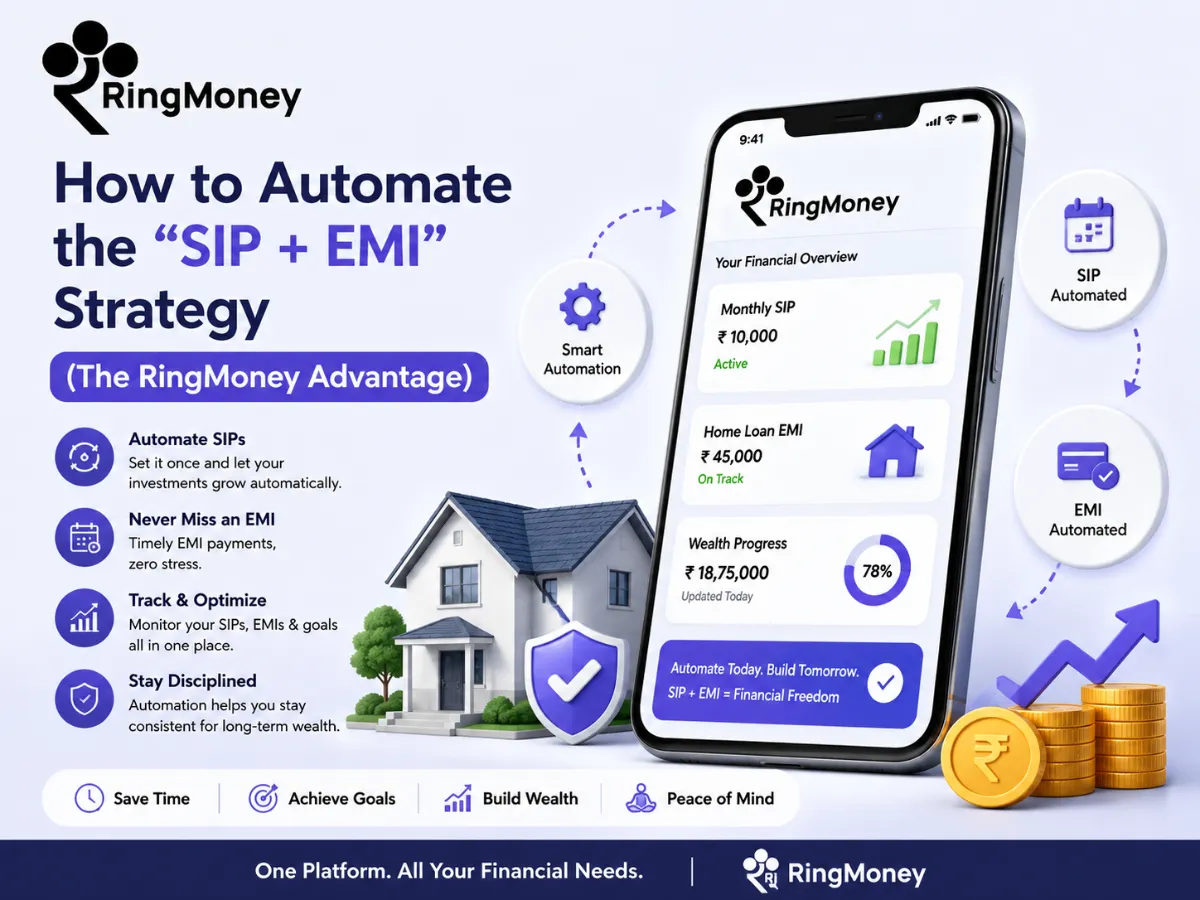
How to Automate the "SIP + EMI" Strategy (The RingMoney Advantage)

Even the best investment strategy fails without consistency.

Managing EMIs, expenses, insurance, savings, and investments together can become overwhelming when platforms feel cluttered or complicated. Borrowers need simplicity because long-term investing works best when it becomes automatic.

This is where we believe RingMoney creates real value.
How to Automate the "SIP + EMI" Strategy (The RingMoney Advantage)

Instead of turning investing into a complex experience, we focus on making mutual fund investing straightforward, clean, and easy to manage alongside existing financial commitments like home loan EMIs. From starting SIPs to tracking progress over time, the platform is designed to help investors stay disciplined without unnecessary distractions.

For borrowers trying to maintain a long-term “SIP + EMI” strategy, simplicity often becomes the biggest advantage.


Common Mistakes Home Loan Borrowers Should Avoid

Investing aggressively while keeping no emergency reserve can create stress during unexpected situations like job loss or medical emergencies.

Ideally, borrowers should maintain:

  • 6–12 months of expenses
  • Separate emergency savings
  • Adequate insurance coverage

before increasing investment exposure aggressively.

Choosing High-Risk Funds Without Understanding Volatility

Many investors chase recent high-performing funds without evaluating risk.

A borrower already handling a large EMI should avoid building an excessively risky portfolio focused only on small-cap or thematic funds.

Balance matters.

Final Thoughts

A home loan does not have to stop wealth creation.

In fact, with proper planning, disciplined investing, and long-term consistency, mutual funds can become an effective parallel strategy that helps borrowers grow financially while servicing their EMIs responsibly.

The key is not choosing between debt repayment and investing. The smarter approach is learning how to make both work together.

A balanced portfolio, realistic SIP commitments, gradual top-ups, and disciplined execution can significantly improve long-term financial outcomes for home loan borrowers.

And perhaps most importantly, it helps ensure that while the home is being built physically, wealth is also being built financially.

Disclaimer

Mutual fund investments are subject to market risks. Past performance does not guarantee future returns. Investors should carefully read all scheme-related documents and consult a qualified financial advisor before making investment decisions.

For regular investment tips, SIP updates, and simple money guidance, follow us on Instagram and explore the link in our bio to get started instantly.

Do not forget to share this post!

Related Blogs

No, a 20% market dip is usually not a reason to stop your SIP. In...

If a mutual fund nominee passes away before the investor, the nomination becomes invalid immediately....

Yes, you can invest in mutual funds even with irregular income—and in many cases, it...

Download RingMoney App

Your personal data is safe with us

Hello India!